Sunday, December 17, 2017

GULLIVER. IN KASHMIR


GULLIVER  IN KASHMIR

Yesterday ,   I was gifted  this book by Arvind Gigoo.  While driving   home , I was tempted to  open  some pages and see what new cameos  Prof Gigoo had  coined  for  events   , personalities   and situations   . I opened  some pages and read  about 30( Out of a total of 300 cameos in the book)    in one go. The first cameo  that grabbed my attention goes as under;
                                   
                                 FACES

 “I am a theist in private ,I am an atheist among intellectuals , I am an agnostic among wavering and I am a Fox in public.”

This cameo is  a sarcastic comment on   present day personalities  and popular  faces  that we come across in public life . Surely ,every atheist is not an intellectual  but certainly most of the intellectuals that we come across present themselves as atheists . And in a crowd of confused people , many educated persons find it convenient to declare that “ nothing exists beyond material phenomenon “ to get a respectful agnostic  label . A Fox knows how to survive. Be cunning while dealing with brute strength. A fox uses adaptability  . Adaptability is the new Mantra for survival.

Are we confused  about what we are ? Are we everything ? Or we have simply become chameleons  who change colour as per situations . Is it necessary to present  ourselves as it suits others? Do we really need so many masks   for  covering and camouflaging  our  real self? Or  is it timidity ?I leave the question open to  debate .

Long back , I   read a novel of Urdu writer Krishen Chander  wherein     a character  replies in a sarcastic way when he is asked his name by    his prospective employer   . I quote from the novel :-


“ Sir , my name depends on what your name is .To live  and get work in Bombay , we keep three four names in our pocket . After coming  to know the  name , religion and caste of our employer , we pull out    a  suitable  name from the pocket  .”

As of now, I have  read  around  30 out of 300   cameos in  the book .Surely, will read, re read and read between the lines all these crisp observations  coming  from an extraordinary  .ind.

The second  cameo that i need to mention  goes like this;
           
             NATURE  VERSUS MAN

“Mr  Poet, what did you write all these years?”
“Verses about the weeping  Chinar and the bleeding river.”
“Anything about man?”
“I am still afraid of that man. That is why I please him.”

Poet Ghalib had commented on himself like this:-

"Ghalib vazeefa-khwaar ho do shah ko dua,
Voh din Gaye  ke  kehtay thhay Naukar nahin huun me".

(O Ghalib ,Now you live on royal grants, keep  saying  'Long live the king'
Gone are the days when you used to say'I am nobody,s servant' "

This  second  cameo in the book  is a  brilliant comment on poets and writers who tend to  walk through safe passages and avoid taking moral stand on issues affecting society.A hint towards current intellectual bankruptcy , timidity .Is  wilful avoidance  a safe path for our intellectual?Is he only discussing 'Nature' to avoid getting involved in agony and sorrows of man or humanity at large? Does he lack courage of conviction? Let us put this issue also to a debate.

And the third cameo is a sarcastic comment on situation created by  failed  leaders and selfish merchants of death and destruction in Kashmir valley. The cunning leaders want to keep the pot boiling to continue their game of fooling  poor and hapless masses  .'"Send your own children towards sunlight and clear skies and pull poor, ignorant and innocent into the dark  mess" This has been  the Mantra for  the merchants of death and destruction in the troubled valley.

I quote this  cameo appearing at page 87 of the book;
                                CHILDREN

" The rich sent their children abroad and the middle classes sent their  to other universities.The poor sent their children to die as heroes and go to Heaven."

I am reminded of a couplet by well known Urdu scholar and poet Prof.Ale Ahmed suroor.I quote..

" Fasl e gul hai  to gulistaan faroshon ke liye
Aabyaari  ke liye khoon e jigar mera  hai."

'For the flower crop ,  let the traitors and enemies of the garden stake their claims,
For irrigating the flower  beds , I  offer my heart's blood."

One more  cameo is again a sarcastic comment on Writers and their books in present day world. Where have book readers of yore gone? Has the Television  come as the biggest enemy of book publishing industry ? The number of book readers  goes on shrinking day after day. Shall we face a situation where authors may  be reading their own books apart from writing them?

 Attend a 'Book Release'  function, gossip with friends over a cup of tea and get  your promised copy  free . Don't open it but  pass it on to a rag buyer/ Kabaadi  with old newspapers and magazines after a month . I quote this cameo:

               .        AUTHOR

"Which book are you reading these days?"
"My own"

The fifth cameo that i would like to mention  goes as under;
     
                              GUESTS

"Friends, I can't meet you for four days, I am expecting guests"
"Who?"
"My son and daughter -in- law"


Arvind Gigoo feels that evaluators ,reviewers and critics of literature in our state ( J & K ) have become well wishers of the authors under a marriage of convenience .According to him , these mutual well wishers work in unison on the settled principle of mutual convenience that says, " you oil my tail, I shall oil yours." Does this marriage of convenience result in mediocrity ? 

I quote another cameo appearing at page 105:-

" The evaluators of the books are the well wishers of the authors.The authors of the books are the well wishers of the evaluators.This is their 'Common aminimum Programme'."


Then there  are so many  Kashmir specific cameos . I quote some as under:-


 E-MAIL ID

" Your E-mail ID?"
"Secession@Quit Kashmir.co.in"

"Your  E-mail ID"
"Accession@migration.co.in"


PERFECTION

"Kashmir without Kashmiri Pandits is incomplete"
" Incompleteness is a form of perfection"

RIVERS

Only two rivers flow here:Dead river and Red River.

EVERYWHERE

When my Kashmir gets freedom, I will spend six months there and six months here.That way I will live Everywhere.


RECORD PLAYER

My record player always plays my favourite song..
"Watan Hamaara Azad Kashmir"

NOMENCLATURE

Don't call me migrant any more. .This is insulting. I am externally displaced and internally misplaced.

SUMMER VACATION

After visiting Tulamula, Zeathyaer and Durga Naag spring they say:-

" There is no problem in the climatically pleasant place. Those who say that the place is a problem are the problem"

INFORMANT

People hooting ,belching ,spitting and beating cans were following the man clothed in sack of jute.Nobody wanted to know who he was.

DARK ROOM

"I am not she.she is sleeping by my side.I am me."
The hand retreated.
{ Newly married youngman living in one room tenement in Jammu post migration from the Kashmir valley)

1990 to 1994

And they spent five Marches in talking about return in April.When the fifth April did not come, Omkar Nath ordered stones , bricks and cement.

SYMBOL  1

"What will be the symbol on the flag of independent Kashmir?"
"A round peg in a holey square"

SYMBOL 2

" What will be the symbol of Pandit occupied Kashmir?"
" A hand pulling a leg"

LOVE

Don't love your neighbour.suspect him.
Love the distant enemy of your country.


BLESSINGS

When the young woman gave birth to a male baby, a man said:
"How cute is your future enemy! May God bless him !"

HEALING TULIP

"What did you give them?"
"Healing Touch"
"What did you give them?"
"Tulips"
"What did you give them?"
"Nothing "

COME AND. GO

"Where are you coming from?"
"Mourning"
"Where are you going?"
"Wedding"


TEMPLE

"The temple is there and the worshiper is here"
" And the two shall never meet "

LAND

We know they don't want us,
We also know we don't need them.


CULPRIT

For many years the people intermittently  shouted:
"Produce the real culprit"

MANY AND ONE

I am many to many and one to one.

DELEGATION

Let us visit these people also and listen to them as if we are serious about them.

WORD

I don't say what I mean because I don't mean what I say.

HARUD..(  Means Autumn in kashmiri  )

"We don't want autumn here. We are the winter"

DISAPPROVAL

"What are you people for?"
"We are against all proposals ,all solutions, all resolutions...All...All...All..."


Prof Gigoo taught English at various colleges in J&K state. Post retirement, he has devoted his time and energy to writing books and translating Kashmiri short stories and verses into English in his unique and exceptional style . Published in October 2017 by NOTION PRESS Chennai( ISBN 978-1-947949-42-3) , the Paperback edition of this  book is available online at Amazon at a very reasonable  price of Rs200/-(Two hundred) .

Be careful ; Gulliver has arrived in Kashmir to see , observe and reflect.Like Jonathan Swift ,  Prof.Arvind Gigoo uses  his words as swords  . He   unclothes  one and all and clears your doubts and misconceptions   . Contrary to his unassuming appearance ,  Prof. Arvind Gigoo is possibly the sharpest observer of men , matters and situations around him. He spares none .  He pricks ,pokes and may be provokes but surely he disappoints None.  The strong  undercurrent of truth in his cameos grabs your attention and forces you to submit.Logic and truth finally prove  victorious over emotions and sentiments. He needs to be read widely .


( Avtar Mota )


Creative Commons License
CHINAR SHADE by Autarmota is licensed under a Creative Commons Attribution-Noncommercial-No Derivative Works 2.5 India License.
Based on a work at http:\\autarmota.blogspot.com\.

Saturday, December 16, 2017

STEAM IN NEW YORK


STEAM  IN  NEW YORK .. 

I was surprised  to see steam rising from manholes or vents at various places  or streets in Manhattan , New York.  Specially  erected vents  with orange  and white stripes  throw steam up.  Come closer to these  manholes on the  footpath , you feel warm.   I was told that the thick  flowing  steam released from  erected  vents  is so hot that it can cause burns .The  heavy iron grill covers of   air vents of underground Metro train stations   also release steam . 

 During late night time when some roads go  to sleep and slip into  silence  , the steam remains active and a  testimony to city's  undying inertia and   energy .

What steam is this?

 I sought  reply to this question  from so many people .  By so many I mean the  Halal snack vendors from Middle East  ,   vegetable and fruit vendors  from Asia and Latin America  ,  Nepali and Sri-Lankans  selling roasted nuts,  taxi drivers from Indian subcontinent ,   shopkeepers, salesmen in malls etc. From them,  I came to know that  the steam is supplied to malls,  high rise buildings,  shops,  domestic  consumers and industrial  consumers through a network of underground pipes by a company since so many decades.  In fact  every high rise building in New york uses this steam for heating,  air conditioning  and continuous supply of hot water . The  credit for this wonderful  steam delivery  goes to Wallace Andrew , who designed and built  first steam system for New york in 1881.And this steam supply system , perhaps biggest ever in the world ,  has proved to be the cleanest source of energy .

Proper billing for consumption  keeps the steam generating company in good financial health. The vents are meant for maintaining  proper steam pressure. Con Edison(  The company  has annual  profit of more than $13billion) or the steam generating company  has been there since 1882. Apart from steam , the company supplies gas and electricity to consumers in  New York .This steam warms up so many landmark buildings  including , Grand Central  Train Terminal,  Met Life Tower, Chrysler  Tower, UNO Tower , Empire State Building , Museums, Hospitals ,  Restaurants  and many more landmark  buildings .  It also warms up the Metropolitan  Museum of Art on 86th street. This steam heats up about 100000 homes , offices and other establishments  in New York using a network of underground pipes . The dish washing in restaurants is done with this steam . It is also used for disinfecting hospitals , railway  stations and  other places .

(Avar Mota)


Creative Commons LicenseCHINAR SHADE by Autarmota is licensed under a Creative Commons Attribution-Noncommercial-No Derivative Works 2.5 India License.
Based on a work at http:\\autarmota.blogspot.com\.

Friday, December 15, 2017

MOUNTAIN PASSES LEADING TO THE KASHMIR VALLEY


                                           ( Banihaal Railway Track below the Pass )
                                       ( Banihaal Railway track below the Pass )

                                             ( Towards Mughal Road or Pir Panjal Pass )
                                                        ( Mughal Serai near Chingus   )

                                                       ( Simthen Pass Kishtwar )
                                                                        
                                                       ( View from Simthen Top )
                                                               ( Simthen Top )


MOUNTAIN  PASSES LEADING TO THE KASHMIR VALLEY
 
( Photo Avtar Mota )
 
Before the construction of two major motorable roads ( Jhelum Valley Cart Road and Banihal Cart Road ) in the north and the south directions of the Srinagar city , the mountain walls which surrounded the Kashmir valley were pierced by outsiders through various passes or openings . For the Kashmiris , these high altitude openings or passes were the only contact routes with the outside world .And for outsiders , these were the only entry routes to the valley .
I may only discuss such passes as had some strategic or commercial utility . In this category I find the Banihaal Pass, Sidau or Budil Pass ,Pir Panjal Pass,Tossa Maidan Pass,Simthen Pass, Zoji La Pass and Kishen -ganga valley passes . There are some other passes like Margan Pass (11,500 ft) into the Wardwan valley and then into Kishtwar, Hoksar Pass (height 13,315 feet) into the Chenab valley and Marbal Pass (height 11.500 feet) into the Ravi valley.
 
BANIHAAL PASS 
 
It lies on the eastern extremity of Pir Panjal range and is about 9300 feet in altitude . The pass used to remain closed for about 5 months due to heavy snowfall. On account of its small altitude, this pass was widely used for going to various settlements along the Chenab river and other hilly kingdoms of the present-day Jammu province . This pass linked many hilly kingdoms like Chenani , Babour( Manwal) etc. across the Chenab ( up to Jammu ) with the Kashmir valley . Presently a rail line and an extremely busy all weather vehicular road passes through this pass.The pass has become the life line for the Kashmir valley. The new Banihaal tunnel , the longest tunnel in India, with a length of 8.45 km has now reduced the distance between Srinagar and Jammu by 16 km. It also reduces travel time from 2 hours to 15 minutes. The new tunnel was thrown open to traffic in 2021.
 
SIDAU OR BUDIL PASS 
 
This pass is approached from Shopian side of the Kashmir valley and Sidau is the name of a village or last village on Kashmir side of this pass. This is the shortest foot route to Akhnoor via Shopian. From Akhnoor people used to go to Jammu and Sialkot using this route . Using this route , Jammu is just 129 miles from Kashmir. As a matter of fact, there was a Kashmiri settlement in Akhnoor town and at present also the locality is named as Kashmiri Mohalla . Presently no Kashmiri speaking person resides in that locality . The highest point on Sidau pass is 14000 feet in altitude . The pass used to remain snowbound for six months . Before 1947, this pass was a route used by Kashmiris to enter Punjab .
 
PIR PANJAL PASS
 
This pass was used by the Kashmiris to travel to Rajauri and Poonch . The highest point in this pass is about 11500 feet in altitude . One could enter the Central and the Western Punjab ( as it used to be before 1947 ) also via this pass. The last village on the Kashmir side of this pass is Hirapur and Bhimber was the last village from Punjab side . This path was patronized by Sultans of Kashmir . Later Akbar also built the Imperial road through this pass which came to be known as the Mughal Road . It was through this route that Qasim Khan , the commander of Akbar’s infantry entered the Kashmir valley. Presently a motorable ( Mughal Road ) road passes through this pass . This road passes through Peer ki Gali, Chita Pani, Aliabad Sarai, Hirapur and Shopian. During the Pathan rule In Kashmir, Birbal Dhar used this route to reach Lahore Darbar and seek Maharaja Ranjit Singh's help to end the suppression unleashed by the Afghan rule in the Kashmir valley .He crossed the pass entering via Devsar, Kulgam.
It is believed that the delegation of 500 Kashmiri Pandits headed by Pandit Kirpa Ram of Mattan went by this route to Punjab to meet Guru Tegh Bahadur seeking his help to end their sufferings. These Pandits first visited Amritsar wherefrom they travelled to Anandpur Sahib.
Due to frequent floods, famines and droughts, the Kashmiri artisans, labourers, Shawl traders and weavers moved to settle in Amritsar, Lahore, Ludhiana and other places in the undivided Punjab using this route for their journey. Sadat Hassan Manto, Saif Ud Din Kichloo, Gama Pahalwan, Nawaz Sheriff (Prime Minister of Pakistan), poet Sufi Tabassum, poet Meeraji, and more names belong to Punjab's migrant population of the Kashmiri ancestry. Using this route, Kashmiri Pandits too moved out from the Kashmir valley to settle in the plains of India owing to suppression during the rule of Aurangzeb and more specifically during the dark days of the Afghan rule in Kashmir . To escape suppression and conversion, the Saprus , Nehrus , Mushrans,Wattals , Katjoos ,Dhars , Tankhahs ,Handoos, Atals , Tikoos, ,Kauls , Bhans , Mattoos and many more clans of Kashmiri Pandits have moved through this route to arrive in Amritsar ,Sialkot, Lahore, Delhi, Faizabad, Allahabad, Kanpur, Agra , Jaipur , Jodhpur and many other cities and towns of the country during the dark rule of Afghans in the Kashmir valley. Jonaraja informs us that the trickle of Kashmiri Pandit moving out had started from the 14th century . The Kashmiri Pandits also arrived and settled in Poonch, Kishtwar, Bhaderwah and hilly kingdoms of Himachal Pradesh crossing other passes. Walter Lawrence informs us that Aurangzeb visited Kashmir via this route and 30000 porters were employed to carry the luggage of the camp from Bhimber to Kashmir. 
 
TOSSA- MAIDAN PASS 
 
This pass was used for travelling to Poonch from the Kashmir valley .Tossa –Maidan is a beautiful green pasture surrounded by dense forests. It is situated about 10 km from Khag ( Budgam district close to Beerwah village in Kashmir) . The highest point on this pass is known as Basmai Gali . Basmai Gali is about 13,000 ft in altitude . After Crossing Basmai Gali , the travellers used to cross another pass –called Poonch Gali to enter Poonch and later to that portion of Punjab which lay between the Jhelum and Indus rivers . Hiuen Tsang and Mahmood of Ghazni used this route to reach the Kashmir valley . Mahmood of Ghazni made an attempt only .After the construction of the Jhelum Valley Cart Road , this pass became less travelled . The pass remained snowbound for 6 months . Loran, Sultan Pathri, Nurpur Gali and Kundlan villages fall on this route. Acharya Vinoba Bhave ( the well known Gandhian ) entered the Kashmir valley through this pass but he took a turn near Ferozepur Pass and trekked via Kantar Nag to reach Gulmarg. Vinoba Ji left on foot via Banihal Pass. 
 
SIMTHEN PASS 
 
One of the major entry passes to the Kashmir valley from Kishtwar side is Simthen pass. The pass is about 3748 meters in altitude. After crossing this pass , one can straightway come to Kokernag area of Kashmir. Simthen pass is about 8 km from Chhatroo and 72 km from Anantnag. It used to be a fair weather pass that was closed for six months. To reach Kishtwar from Kashmir , a traveller had to cross Wadvan and Chenab rivers . Presently there is a motorable road that connects Kashmir with Kishtwar through this pass.When Zulqadar Khan (Dulcha), the Tatar chief invaded and plundered Kashmir,helpless Simha Deva (the then king) ran away to Kishtwar through this Pass.
 
To escape starvation deaths during frequent floods, droughts and famines in the Kashmir valley, many poor inhabitants moved to Kishtwar, Doda, Bhalesa , Bhaderwah, Banni, Basholi and Gandoh areas of Jammu province through this pass . They settled permanently in these places . Congress leader Ghulam Nabi Azad's ancestors also came from the Kashmir valley to Bhalesa through this route. Similarly , the ancestors of Abdul Gani Goni, Darvesh Ishaq Sahib, poet cum singer Ghulam Nabi Doolwal, poet Rasa Javidani and many more have come from the Kashmir valley to the these areas of the Jammu province through Smithen Pass only. 
 
Kashmiri artisans trekked through this route to introduce shawl weaving in hilly kingdoms of Basholi, Nurpur, Kangra, Haripur, Mandi and Chamba. Kashmiri Pandit artists ( mainly from Raina and Razdan clan) trekked through this route to join various hilly kingdoms as court Painters. They revolutionised Pahari Art in the hills. Shiv Raina,Nainsukh, Manaku and many more ( who are known as great masters of Pahari miniature art) were Kashmiri Pandits who arrived in the hilly kingdoms via Simthen pass. This art was later spread in other hllly kingdoms by Ranjha and Nikka who were talented sons of Nainsukh Raina In fact Nain Sukh had four sons Ranjha , Kamu ,Gourhu and Nikka and all of them were master artists .
 
ZOJI LA PASS .
 
Zoji La pass is 11300 feet in altitude . It connects Kashmir with Ladakh , Tibet , China and the Central Asia. It has been a widely used route for trade with Tibet, Central Asia and China by the Kashmiris . It was through this route that Buddhist scholars and savants from Kashmir went to spread Buddhism in Tibet, China and other places in Central Asia . It was through this route that Rinchana entered Kashmir and Mirza Haider Dughlat first invaded Kashmir . The pass remains snow bound for about five months at present as well even when a motorable road passes through it . The proposed Zoji La tunnel is likely to create an all-weather link of Ladakh with the Kashmir valley .
As per Rajtarangini, illustrious King Lalitaditya of Kashmir travelled through this pass on his expeditions to Central Asian countries.
As per the Sikh history, Guru Nanak Ji went to Kailash Mansarovar and then visited Tibet. From Tibet, he came down to Ladakh and finally entered the Kashmir Valley through Zoji La pass. There is a Gurudwara dedicated to his visit on the ‘Magnetic Hill’ near Leh.
Another important traveller to use this route is Mir Sayyid Ali Hamdani . He entered the Kashmir valley in the fourteenth century through this pass along with many Syeds from Hamadan. Shrines built in his honour at Khaplu(Gilgit Baltistan) , Leh and Doderhama ( Ganderbal )confirm his entry and journey route to Kashmir from Central Asia. Held in high esteem and known as Shah e Hamdan in Kashmir, he played major role in the spread of Islam in the Kashmir valley. 
 
KISHEN-GANGA VALLEY PASSES 
 
North west and North Kashmir has also some smaller passes that had lesser utility for trade and commerce . These passes had lesser strategic importance . Razdhan pass ( 11700 feet in altitude ) is one important pass that leads to the area of Darads in the upper Kishen-Ganga valley via Bandipora . At Razdhan top one can catch a glimpse of the Harmukh peak, one of the highest mountain peaks located in the Kashmir valley. This pass remains closed for about 5 months during the winter due to heavy snowfall in the area. From Gurez one could cross Burzil pass ( 13500 feet In altitude ) to reach Astor and Gilgit and Skardu .Carrying heavy loads on their shoulders, the Begar labourers trekked these tough passes to reach Bonji, Gilgit, Astor and other places. They carried rations and other supplies for the harsh winters. 
 
Sadhna Pass (3000 metres) , previously called as Nasti-tshheun( cut nose) pass, connects Karnah Tehsil of Kupwara district with the rest of the Kashmir valley. It is located in the vast Shams Bri mountainous range of Himalayas . To reach Sadhna pass one has to go via Kupwara . This was a very important pass before 1947 . It is the route to Teetwal , Keran and the Neelam valley. Before 1947, Kashmiri Pandits used this route to enter the Neelam valley and go for the pilgrimage to the Sharda shrine. This route was also used to go to Muzaffarabad from Kashmir . The pass remains snowbound for about 4 months .The construction of the Sadhna Pass tunnel will provide Karnah, a far-flung area near the Line of Control (LOC) in Kupwara district, all-weather connectivity with the rest of the country.
 
In his book 'Thirty years in Kashmir' Dr Arthur Neve makes a fascinating mention of his journey to Astor and Skardu from Kashmir via Burzil Pass. The Chak rulers crossed Razdhan pass to arrive in the Kashmir Valley. 
 
(Avtar Mota )


Thursday, December 14, 2017

FLAT IRON BUILDING MANHATTAN NEW YORK


  ( Photo.. Triangular Top of Flatiron Building from 86th floor of Empire state building )
                                   
FLATIRON (Flat Iron) BUILDING...
( Mobile Photos.. Autar Mota)


The building is a unique construction that came up in 1902 as first skyscraper in Manhattan New York. This 22 storey  tower lies on 5th avenue of 23rd street west . It is raised on a triangular plot of land that is just 6.5 feet at one corner. 
                                           
   ( Flatiron building under construction ) 

This heritage and historic structure lies close to Madison Square Park ( not Madison square Garden which is at 33rd street). The building has been built with steel frames and the exteriors are decorated with terracotta designs and images . No traditional building material has been used in its construction.

Flatiron Building has been painted by many well-known artists of America and Europe. It is prominently featured on postcards sold in stores over here.

You find the area always crowded with tourists .They are always busy with their cameras clicking the structure.
 

An enclosure that is open on all sides has also been created near the building. You can sit ,relax and order snacks apart from enjoying free WiFi facility over here. Madison Square Park is just across the road.

For Manhattan residents of those days, this tower symbolized progress and development.

Don't be surprised to find a woman selling "100℅ Cashmere  Woolen" on the footpath. She sells mufflers and caps at $8 each piece.
"Yeah imported from Cashmere " ,she assures you.She doesn't know anything about Cashmere (Kashmir).

The layout of Manhattan city creates orifices for winds to blow in. You have river East on one side and Hudson on the other side. Atlantic is close by .The avenues and streets are perpendicular to each other creating long and vital spaces for winds to blow in. On the day of our visit to Flatiron Building , New York was pretty cold . We felt the chill and decided to walk back.

(Avtar Mota)

Creative Commons LicenseCHINAR SHADE by Autarmota is licensed under a Creative Commons Attribution-Noncommercial-No Derivative Works 2.5 India License.
Based on a work at http:\\autarmota.blogspot.com\.

VIKAS KHANNA' S " JUNOON " RESTAURANT IN MANHATTAN NEW YORK.

                                                                             
                                                          ( Vikas with his Mother )
                                   ( This Blogger outside  Junoon In Manhattan )
                                                 ( The Flat Iron Building nearby )
                                            ( The Street where Junoon is Located )


VIKAS KHANNA' S  " JUNOON " RESTAURANT MANHATTAN NEW YORK.

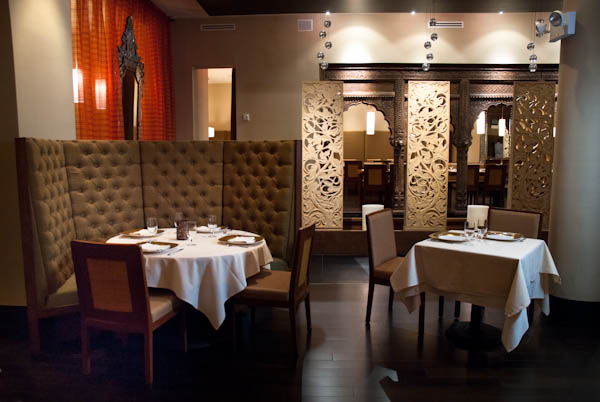
   Visited Junoon in November 2017.The restaurant is very close to Flat Iron Building on 5th Avenue 23rd Street . Vikas is a celebrity chef from Amritsar who came to NYC barely two decades back. He is well known name in Restaurant Industry .His mouth watering innovative Indian cuisine has been enjoyed and relished by Obamas and Clintons. He Cooked for Prime Minister Modi during his recent visit to USA. So does he cook for Dalai Lama and Many Hollywood celebrities.

Junoon is a Michelin star ranking restaurant in NYC and Vikas khanna is ranked as one among top ten iconic chefs world over.

Junoon has 100-seat restaurant , 45-seat private dining area , 50-seat Bar and lounge. The cosy Bar serves you Cocktails, impressive wines and Beer.

" Whatever I am , I owe it to my mother. I come from an ordinary family of Amritsar. I don't know how shall it be possible for me to repay the parental debt . Miss the food cooked by my grand mother. Here in New York I did all sorts of work initially. Slept in night shelters and experienced homelessness. I even did some odd jobs like looking after a cat while the house owner went for work. I was paid something like $12 per hour for that job. My mother's words have always been my guide. During my college days, she would always say:

"son do what you want but be honest. Don't cheat. Work, earn and when you have some surplus, go for charity. Those in Need were also created by the same god who created you."


I respect Vikas khanna for his simplicity, humility, attitude , Hard work and ever smiling appearance. With his own innovations, he has made Indian food and spices quite popular over here. 
To visit JUNOON, you need to book a table in advance over telephone.

About vikas Khanna,  NDTV news reports:

" Every year since 1992, Chef Vikas Khanna has fasted for a day during the holy month of Ramadan to honour a Muslim family he credits with saving his life during the 1992 riots in Mumbai. Now, 26 years later, the New York-based celebrity chef says he's happy to have finally found the family he lost touch with. "

Best wishes for Vikas and his team.

(Autar Mota)


Creative Commons License 
CHINAR SHADE by Autarmota is licensed under a Creative Commons Attribution-Noncommercial-No Derivative Works 2.5 India License.
Based on a work at http:\\autarmota.blogspot.com\.

Wednesday, December 13, 2017

WORKS OF ARTIST MAX ERNST ON DISPLAY AT MOMA ( MUSEUM OF MODERN ART ) NEW YORK


MAX ERNST ON DISPLAY AT MOMA ( MUSEUM OF MODERN ART NEW YORK )


I am Highly Impressed by Max Ernst’s work Displayed at MOMA New York. Surrealist Artist Max Ernst (French and American, born Germany. 1891–1976) appears to have done untiring experimentation with forms and mediums . 

At MOMA , His work is displayed in a separate Gallery named “Beyond Painting” . He explains to you the irreparable effect of world war I and II on Human Mind . His work challenges material and set compositional rules of Art .  

 Six paintings uploaded below were  seen and photographed by  me   during my visit to  MOMA..
                                                                        
     (THE BLIND SWIMMER 1934.OIL AND GRAPHITE ON CANVAS)
(Two children Threatened by Nightingale 1924. Oil with Painted wooden elements and cut and pasted printed paper on wood with wooden frame ..)
                                              (THE FASCINATING CYPRESS)
                                                            (HABIT OF LEAVES)
  

                                                       (THE WHEEL OF LIGHT)
                                           (NAPOLEON IN THE WILDERNESS 1941)

                            (FOREST AND SUN 1931  PENCIL FROTTAGE ON PAPER)
                                                                        
(
BUTTERFLIES 1931..CUT AND PASTED PRINTED AND PAINTED PAPER , CELLOPHANE AND PENCIL ON PAPER ..)

He did so many things ; Painting , Graphic designing , illustrating Books , Sculptures in stone and bronze, Printing using a range of techniques. His several works represent his artistic typographic designs and something of a secret symbolic script of the artist’s own invention. 

 Below are some more paintings done by  Max Ernst ( These 3  paintings could not be located at MOMA  by me ) .
                                                                      
                                                           (CITY WITH ANIMALS)


                                              (SOLITARY TREE AND MARRIED TREES)
                             (OF THIS MAN SHALL KNOW NOTHING)

“ My paintings are not meant to be tasted.”
(Max Ernst)

( Autar Mota )
Creative Commons License CHINAR SHADE by Autarmota is licensed under a Creative Commons Attribution-Noncommercial-No Derivative Works 2.5 India License.
Based on a work at http:\\autarmota.blogspot.com\.