Thursday, July 11, 2024

LITTLE DANCER BY EDGAR DEGAS IN THE NATIONAL GALLERY OF ART ,WASHINGTON D.C.


             ( The Ballet Dancers by Edgar Degas )
             ( The Ballet Dancers by Edgar Degas )


         ( The Rotunda  of the National Gallery )

 ( Avtar Mota near the  lobby  fountain )


                   ( Self Portrait  by Degas )


Little Dancer Aged Fourteen
by
Edgar Dega

(Degas has used pigmented beeswax, clay, metal armature, rope, paintbrushes, human hair, silk and linen ribbon, cotton faille bodice, cotton and silk tutu, linen slippers and a wooden base for  the original  sculpture done sometime in 1878 to 1881 )

This sculpture kept in a glass casket , is a prized possession  with The National Gallery of Art , Washington DC. This was the second prominent artefact shown to us by our guide inside the museum on 6th July 2024. The guide said this :-

"Sculpted by Degas between 1878 and 1881, the work is often referred to as the most famous ballerina in the world. The artist was a frequent backstage presence, painting and sketching the dancers as they rehearsed or stood in the wings waiting to perform. Now adored, this original wax version of Edgar Degas’ Little Dancer Aged Fourteen was reviled by most critics when it was shown at the 1881 impressionist exhibition in Paris.Edgar Degas created a sensation in Paris when he presented his Little Dancer sculpture. His intention was to portray a young girl who dreamed of having an “illustrious life” in ballet, but who also kept “her identity as a girl from the streets of Paris.It was subjected to harsh criticism. Degas never exhibited the sculpture again, and Little Dancer was largely forgotten until it was rediscovered, together with dozens of other wax sculptures, in the artist’s studio after his death in 1917. Most of these original sculptures are now in the National Gallery of Art’s collection, while bronze casts made from these wax originals after Degas’ death can be found in many museums around the world.
The original wax sculpture was acquired by Paul Mellon in 1956. Beginning in 1985, Mr and Mrs Mellon gave the National Gallery of Art 49 Degas waxes, 10 bronzes and 2 plasters, the largest group of original Degas sculptures. Little Dancer was among the bequests. As I told you people earlier, Paul Mellon was a wealthy philanthropist and son of Andrew Mellon who built this National Gallery of Art in Washington DC. "

Edgar Degas (born July 19, 1834, Paris, France—died September 27, 1917, Paris) was a French painter, sculptor, and printmaker who was prominent in the Impressionist group and widely celebrated for his images of Parisian life. Degas’s principal subject was the  female—figure, which he explored in works ranging from the somber portraits of his early years
He painted   laundresses, cabaret singers, milliners, and prostitutes of his Impressionist . Ballet dancers in the backstage and also on the stage  would preoccupy him throughout his career. He did some fantastic sculptures as well paintings depicting ballet dancers.One wax sculpture  named,'  Little Dancer Aged Fourteen'  earned him worldwide fame.

Degas’s experimentation is unsurpassed in 19th-century French art, whether he was making pastels, drawings, prints, sculptures, or paintings. The Little Dancer Fourteen-Year-Old (French: La Petite Danseuse de Quatorze Ans) is a sculpture  by Degas that depicts a  young student of the Paris Opera Ballet dance school, a Belgian girl  named Marie van Goethem. Marie van Goethem, the model for the figure, was the daughter of a  poor Belgian tailor and a laundress; her working–class background was typical of the Paris Opera school's ballerinas.

Bronze replicas of Edgar Degas’s Little Dancer Aged Fourteen fill museums around the world. But the artist himself only created one Little Dancer. Made of beeswax, clay, metal, wood, and rope, the sculpture stands proudly in The National Gellery of Art ,Washington DC . Done in wax and wearing a real bodice, stockings, shoes, tulle skirt, and horsehair wig with a satin ribbon, the figure astonished Degas' contemporaries, not only for its unorthodox use of materials, but also and above all for its realism, judged brutish by some. This 3 feet sculpture forced viewers to confront the seamy side of the ballet, the cultural institution at the center of metropolitan life. In those times, the ballet dancers came from working-class families and were popularly understood to be vulnerable to moral corruption at the hands of well-off suitors.

The Little Dancer is a very poignant, deeply felt work of art in which a little girl of fourteen, in spite of the difficult position in which she is placed, both physically and psychologically, struggles for a measure of dignity: her head is held high, though her arms and hands are uncomfortably stretched behind her back.

When exhibited, a prominent art critic wrote, “I don’t ask that art should always be elegant, but I don’t believe that its role is to champion the cause of ugliness.” Some critics called it  “repulsive,” “vicious,” and “a threat to society.”  It is said one father cried, 'God forbid my daughter should become a dancer.' Degas added to the controversy by exhibiting it like an anthropological specimen in a glass vitrine.

After Degas died in 1917, his heirs discovered Little Dancer in his studio. They commissioned the bronze casts which most are familiar with today. In the 100 years since the bronzes were made, public opinion of the sculpture has swung in the opposite direction from reviled to admired and  made iconic. About this sculpture of Degas, Eric Gibson writes this in  'Wall Street Journal ' :-

" ' Little Dancer' is one of the most bewitching and mysterious works in the entire canon of modern art. In part this is due to the contrast between the in-your-face realism of the dancer’s attire and the mood of psychological withdrawal created by her facial expression, with its half-closed eyes. But it also has to do with the work’s history and the circumstances of its creation."

Degas developed distinctive compositional techniques, viewing scenes from unexpected angles and framing them unconventionally. He experimented with a variety of media, including pastels, photography, and monotypes, and he used novel combinations of materials in his works on paper and canvas and in his sculptures. He primarily viewed his sculpture as a means of researching movement and publicly exhibited only one, Little Dancer Aged Fourteen (1878–1881).Outside a close circle of friends, Degas’ fascination with making sculpture was little known during his lifetime. His sculptural work was largely private and when his studio was inventoried after his death in 1917, more than 150 sculptures, mostly in wax, were discovered. Many were in pieces and badly deteriorated but more than 70—representing mostly dancers, horses, and women—were salvaged and repaired


Despite his long and fruitful association with the impressionists, Degas preferred to be called a realist. His focus on urban subjects, artificial light, and careful drawing distinguished him from other impressionists, such as Claude Monet, who worked outdoors, painting directly from their subjects.  A steely observer of everyday scenes, Degas tirelessly analyzed positions, gestures, and movement. 

Degas was close to many woman though he never married and remained devoted to his art. Notable women in his life could be listed as  Helena Valpincon,Mary Cassatt,Suzanne Valadon, and Jeanne Fevre. Jeanne was his niece and discharged the role of his housekeeper. Mary  Cassatt  was an American artist. Helena and Suzanne were the subjects of his many portraits. He was known to be a  smoker  who also loved Absinthe, a highly alcoholic drink  popular  among artists and writers in 19th-century France. Edgar Degas died of heart disease on September 27, 1917, at the age of 83. Degas's paintings fetch astronomical prices in the art markets. His painting "Dancer in Repose" was sold for approximately $37 million in 2008.


I saw the book  ,LITTLE DANCER -THE DEGAS POEMS by Lyn Lifshin. This 40 page book  has 29 poems . Through these poems, the poet Lyn Lifshin, imagines and explores the world of Marie Van Goethem, the "Little Dancer" sculpted by Edgar Degas. Lyn Lifshin's poems celebrate her creation as a symbol of so many young and impoverished French female dancers who attempted to fill our world with grace, energy, and beauty.  I end this write up her poem , 'The Little Dancer '  ;

( The Little Dancer )

was Degas in love with her?
Obsessed? Driven? Her
hair bound in probably
stolen ribbons. Not one image
but four. Her hands behind
her as if cuffed, a prisoner
of her poverty, exchanging
her body on stage or in
some rich patron's bed,
offering a fantasy of ideal
femininity under the
sheets or on pointe on
the stage. And did Degas,
so fascinated by her, want
to know in every way,
what was inside her?

( Avtar Mota )


Creative Commons License
CHINAR SHADE by Autarmota is licensed under a Creative Commons Attribution-Noncommercial-No Derivative Works 2.5 India License.
Based on a work at http:\\autarmota.blogspot.com\.

Tuesday, July 9, 2024

NEW PALTZ, ROASTED SAMOSA OF KRISHNA KITCHEN AND ANDRE MALRAUX (1901-1976


NEW PALTZ, ROASTED  SAMOSA OF KRISHNA KITCHEN AND  ANDRE MALRAUX (1901-1976)

“Man is not what he thinks he is, he is what he hides.” .........Andre Malraux

For the weekend ( 28th June,2024)   , we arrived in  New Paltz,a small town and a  tourist place;   about one and half hour's car drive from Jersey city  . It is our third visit to New Paltz. It was cold and rainy . I like the  small, cosy and touristy  shops of this lovely town more particularly the Indian vegetarian food served by Krishna Kitchen restaurant.  Apart from Khichdi,  Idli ,Dosa and other dishes ,one gets  delicious  Samosas  served with mouthwatering tamarind and dates chutney.  This restaurant has innovated Samosa making by  roasting it  in oven instead of deep frying. No oil at all .  The filling is fantastic with green peas , boiled potatoes, Anardaana, boiled cashew nuts, coriander leaves. cinnamon,small  ginger pieces.The restaurant is run by three like minded friends ( two Americans and one Indian immigrant ) who are members of Hare Rama Hare Krishna sect. Amazing food .

I also  visited the book shop opposite to the restaurant known as," Inquiring Minds" where one can also buy old books in perfect condition for anything below 5 US Dollars. I bought two books; " Essays of Andre Malraux "and " Central Asian Paintings From Afghanistan to Sinkiang". Started reading " Essays of Andre Malraux"  who  has been identified with some of the most notable events of contemporary history: the Chinese Revolution, the development of Communist Russia, the Spanish Civil War, the struggle against Nazism, the French Resistance Movement, and the “resurgence” of France under the Gaullist presidential monarchy. In 1945-46 he joined the provisional government of Charles de Gaulle. From 1959 until 1969 Malraux was minister for cultural affairs. He retired to a suburb of Paris, where he continued to write until his death.
Malraux is unique among contemporary novelists in having played a major personal role in the sort of political adventure he describes . While it was not he, but Sartre, who popularized the term engagement (commitment), he seems to have practiced commitment in a much more impressive way than Jean Paul Sartre, long before Sartre became prominent. He also expressed the concepts of the “Absurd” and “Existentialist Man,” well in advance of the time when these terms became part of common parlance.  He produced several large volumes about the function of art in the history of mankind. For all these reasons, he might be hailed as the most representative humanist of his time who was denied Nobel prize .

ALBERT CAMUS AND MALRAUX

They were contemporaries, brilliant and original.  In 1935,  Camus was a student when he heard Malraux in his university in Algeria .Camus told a friend ‘you can't believe , how much I admire AndrĂ© Malraux.’

After attending a private screening of Malraux’s poignant film based on his Spanish war novel, Man’s Hope, Camus exclaimed, ‘I was overwhelmed. What a joy to be able to admire something wholeheartedly.’ When he finally met Malraux through their mutual friend, the writer and journalist Pascal Pia, Camus added, ‘I spent a fascinating hour with a person full of tics, feverish and disorganised, but with an amazing intelligence.’
Malraux had praised Camus’s The Stranger (The Outsider )  and The Myth of Sisyphus for powerful ideas and persuasive technique: ‘I read L’Etranger first. The theme is very clear. . . . It is obviously something important. The strength and simplicity of the means, which end up forcing the reader to accept the character’s point of view, are all the more remarkable given that the fate of the book depends on how convincing this character is. And what Camus has to say, what he has to convince us about, is not insubstantial.’ Malraux added

But the two friends inevitably had serious political disagreements. Malraux, a fellow traveller, justified Stalin’s Purge Trials and the slaughter of his Anarchist allies in Spain as necessary measures in the fight against fascism.Malraux opposed French colonialism in Algeria; Camus was loyal to the cause of the French settlers in that country. These difference were  the subject of heated discussions inside Cafe de Flore , a restaurant frequented by Sartre, Camus, Malraux and almost  all the artists ,writers and intellectuals living in Paris during those days.

The Nobel Prize committee refused to honour Malraux for being  closely connected to de Gaulle .When informed that he’d been awarded the Nobel Albert Camus repeatedly said, ‘I wish Malraux had got the prize. He deserved it more than I did,’ and insisted that Malraux ‘would have won it if it wasn’t for his politics.’
Camus’s early death at the peak of his fame sanctified him while Malraux, closely associated with de Gaulle, was demonized by the Left.

(Avtar Mota )


Creative Commons License
CHINAR SHADE by Autarmota is licensed under a Creative Commons Attribution-Noncommercial-No Derivative Works 2.5 India License.
Based on a work at http:\\autarmota.blogspot.com\.

Monday, July 8, 2024

A VISIT TO WORLD WAR II MEMORIAL IN WASHINGTON DC


A VISIT TO WORLD WAR II MEMORIAL  IN WASHINGTON DC

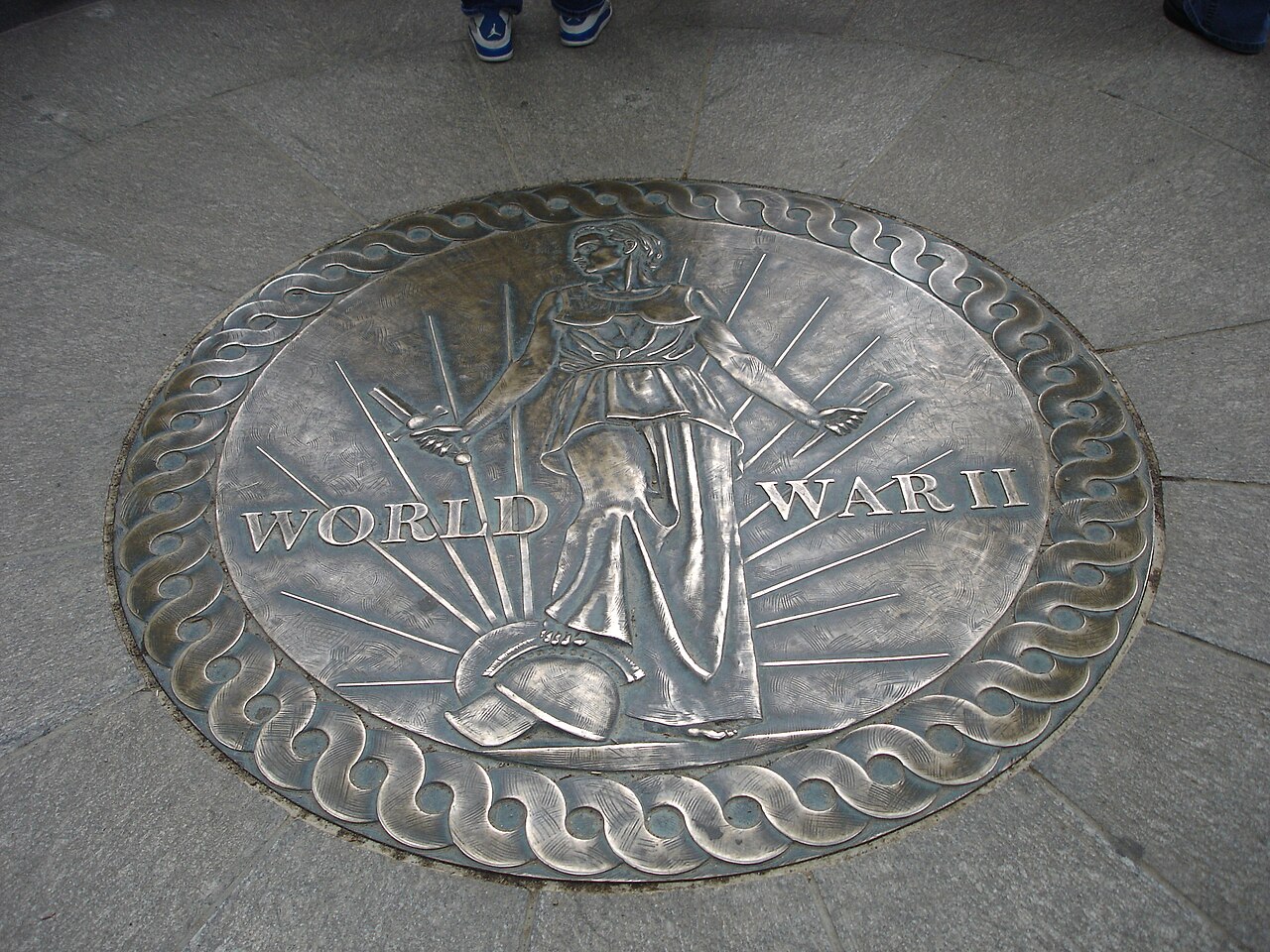
One  among some stunning monuments  in Washington DC is the Second World War Memorial built in 2004 over 7 acres of land . It was  in 1987, World War II veteran Roger Durbin  was the first person who gave the idea of building World War II MEMORIAL to Marcy Kaptur ,a Democrat from Ohio.  Marcy Kaptur introduced a bill in the House Of Representatives and the idea took shape.

The monument comprises of granite columns erected around a fountain  .Symbols of America’s triumph in the Second World War are artfully displayed all over the World War II Memorial.
56 granite columns symbolize unity among the 48 states, seven federal territories and the District of Columbia. The columns form a semi-circle around the memorial’s plaza, with two 43-foot tall arches on opposite sides. The northern arch represents victory in the Atlantic, while the southern arch symbolizes victory in the Pacific. Under each of the two memorial arches, the Pacific and Atlantic baldachinos, four eagles carry an oak laurel wreath. Each of the 56 pillars bear wreaths of oak symbolizing military and industrial strength, and of wheat, symbolizing agricultural production.  The central fountain show adds serenity and grace to the memorial .Located close to the  Potomac river that flows through Washington , the memorial  was inaugurated in April 2004. Entry is free . The Lincoln Memorial and the pillar shaped  Washington Monument ( Obelisk ) can be seen located closely but on the opposite directions of this War Memorial . The White House,the National Mall,  the Capitol and the Jefferson Memorial are also close by. So are some prominent museums and art galleries.


One of the World War II Memorial’s most striking features is the Freedom Wall. 4,048 gold stars pay tribute to American lives lost at war (each star represents 100 Americans), while dozens of battle names and military campaign destinations are also on display. In front of the wall, a stone fittingly reads, “Here we mark the price of freedom.”

When you enter the memorial’s semi-circle from the east, look for two walls on each side of you. Each contains scenes from the war beautifully rendered in rectangular bronze reliefs.

The National World War II Memorial honours the 16 million people who served as part of the U.S. Armed Forces during World War II, including more than 400,000 who gave the ultimate sacrifice for their country. Two victory pavilions, representing the Atlantic and Pacific theaters where the war was fought, house massive bronze sculptures of eagles laying laurel wreaths above a representation of the Victory Medal. At the base of each pavilion is a pool with the names of campaigns and battles of each theater of the war. India is also mentioned under Pacific pavillion .

( Avtar Mota )


Creative Commons License
Based on a work at http:\\autarmota.blogspot.com\.