Friday, January 19, 2024

REMEBERING JANUARY 19, 1990 , THE DARKEST DAY IN THE HISTORY OF KASHMIR


    ( A Kashmiri Pandit house in village Haal, Pulwama. Photo Avtar Mota )

 JANUARY 19, 1990…

19th January is the darkest day in the history of Kashmir. Over three decades after the Kashmiri Pandits were made to leave their homes in the Kashmir valley in the wake of terrorism, they still remain hopeful of returning to their native land. I have tried to convey the collective pain and agony in this 34th year of exile through my Kashmiri poem “ Barmandhinien Gayee *Maagitch Maavas “ or “ The noontime turned to a cold and dark Amaavas ( night ) of Maagha ( winter month ) ”. The poem is dedicated to the victims of terrorism the world over. The poem has been written specifically concerning the conditions of the Kashmir valley during 1990 when terrorism arrived in Kashmir resulting in wanton death and destruction. Clouds of gloom and darkness covered the sky during that period putting all Kashmiris to grave miseries and suffering. It also tore apart the fabric of peaceful co-existence and shared past. Kashmiri Pandits, who became the soft targets, were left with no option but to run for safety and save their lives and honour and live as exiles in the plains of the country.


(“ Bar-mandhinien Gayee *Maagitch Maavas “)


“ Dazavieni gaejji deut paan duul daarith

Yeli kraekh gayi " he naar haa naar "

Pataa pataa paetch marghat zchhaaya aessi

Puth vuchhahav tath maa ouss vaar

Shraana garien hundh ouuss yeun gatchhuna

Toboodhan hundh ouss bazaar ..

Neithanon thosukh kadhala thaethiss pyath ,

*Budshaah raa'za su paalanhaar.

*Dhaan kutchhi mutchie manz shrop ghar deevta

Gueil mooraan , dumm phaeit laachaar ..

Astaaneitch dashie vaetchh naalien manz

Tchhot'a deras pyath aeiss dastaar..

Baddie kuthei vuchh tchirniev kienn tammie do'hh

Aangan patchie barinein hundh naar ..

*Thokur ku’thee gayi kraekh " kas traavith "

*Kaawa patchien pyath thov loktchaar ..

Shaaluv raaett chhir kath vatie vatie pyath

Gannie gannie zchopukh myooth shikaar..

Bar-maendhineun gayee maagitch maavas

Thossi thossi pyaav sheen ryath ouss haar.

Sombrithh haavas bar gayee neerith

Akh log laar ta akh log daar .

Gattakaaras manz zoov rott motchhi manz

Botchhi hoa’t deut sheena baalas taar

*Veerus tal vaatith dhitch kraekh vethi

“ Baar khodaaya paap nivaar ”

( Avtar Mota )


My simple English rendering of the lines goes as under …


(“ The noontime turned to a cold and dark night of *Maagha “)

Throwing a pitcher full of water over it,

We doused the kitchen fire

When cries of "Fire ! Fire! " spread all around.

A death shadow kept trailing us on our paths

And fright came in our way even to look back.

Hectic remained the activity of corpse bathers,

And brisk was the business in the coffin bazaar.

Naked,they dragged him down the bridge,

He who happened to be our protector,

our beloved Sultan Zain ul Abdin ( Budshaah ).

Shocked, dumb and helpless,

the’Ghar-Dewta’ ( Lord of the House )

hid himself in a large earthenware container

in the grains store.

In the filthy drains outside,

were thrown the sacred strings of faith

hung in the shrines.

And on the heaps of rubbish

lay the headgears ( Dastaar) of our elders.

From the chinks of the windows of the sitting room,

we saw fires blazing in the wooden fencing of our courtyard.

Inside the Pooja room, the idols cried,

"In whose care are you leaving us ?"

And those sweet memories of childhood,

we placed on the shelf meant for

offering the kitchen food to the birds.

On every path,the wolves preyed upon innocent lambs

and devoured their flesh piece after piece.

The noontime turned

like the dark and cold night of *“Maagha”.

And in the summer month of *“ Haara “,

endlessly fell the snow from the sky.

Ask not about those desires held close to the heart,

away went one in this direction while the other moved in that.

Holding our lives in these palms

and crying with pangs of hunger,

we crossed the snowy mountains

in total darkness.

And after moving down to the Weir ( Chattabal ),

the waters of the meandering

Vitasta cried ;

“ O God ! unburden us of our sins ”


( Avtar Mota )

 PS

(1)

Ghar Dewta was a popular concept with the Kashmiri Pandits. They would believe that every house was protected by an omnipresent invisible Dewta ( God ), who, according to the legend, would always support the family's positive endeavours.

(2) Sultan Zain ul Abdin is fondly remembered as Budshaah or the great king by Kashmiris. He was the most loved and adored king of Kashmir. A liberal Sultan , he is known for popularizing handicrafts, trade and fine arts in Kashmir. Kashmir witnessed an era of peace, progress and prosperity during his rule. He was specifically compassionate to Hindus who had moved out to the plains due to fear and suppression during the rule of earlier Sultans.

(3) Every Kashmiri Pandit household had a wooden shelf kept near the kitchen window or at some convenient place on the outer wall of the house where freshly cooked food was placed every morning for crows and other birds. This wooden shelf was known as Kaawa Paett ( shelf for crows ).

(4) Thokur Ku’th or Pooja room was an essential feature of a typical Kashmiri Pandit house. Age-old idols, images of deities, conch shell, bells, lamps and sacred scriptures/ books were kept in this room. Every day, the head of the family would perform Pooja with flowers. Earthen lamps with oil were lit and incense was also burnt for worshipping deities.

(5) Every Kashmiri ( both Pandits and Muslims ) house especially in rural areas, had a Dhaan Ku’th or a room meant for storing paddy/ grains after the harvest. This paddy was stored in a big earthen container known as Dhaan Mae’tt. A normal person could conveniently hide inside this earthen container.

(6) Maagha is the wintry month of the Bikrami calendar that corresponds to mid-January to mid-February. Maavas or Amavasya is the darkest day of the shadowy fortnight of cold Maagha month.

(7) Weir is an English word which literally means a dam across a river to raise the level of water upstream or to regulate the flow of the stream. It also means an enclosure of stakes set in a stream to trap fish. Designed by British engineers, the Chattabal Weir was constructed during the rule of Maharaja Partap Singh in 1906. The primary aim at that time was to make the Jhelum River fit for navigation by maintaining the water level around the year and also save damage to the wooden base of many houseboats and Doongas parked on Ghaats along the river as the River bed turned dry at many places due to low water level. It was also meant to trap fish around the year in the Jhelum River.

Associated with our painful and also grand past, this Vitasta River has been a witness to the rule of many Kings and emperors. It has been privy to many calamities and moments of elation brought by them. Inspite of moments of delight and misfortune, the River has kept its pace and never stopped yearning for a peaceful future. It has been privy to the march of civilizations that have flourished and vanished.

(7) “ Baar Khodaaya Paap Nivaar” is an immortal line composed by Sheikh Nur ud din ( Nund Reshi ) the tallest Reshi saint of Kashmir. The line is a true representation of the Reshi cult of Kashmir. The first two words have Persian origin ( Baar Khodaaya ) and the remaining two ( Paap Nivaar ) are from Sanskrit.


 Creative Commons LicenseCHINAR SHADE by Autarmota is licensed under a Creative Commons Attribution-Noncommercial-No Derivative Works 2.5 India License.
Based on a work at http:\\autarmota.blogspot.com\.

Sunday, January 7, 2024

WINTER WITHOUT RAIN OR SNOW IN KASHMIR


WINTER WITHOUT RAIN OR SNOW


In my youth, sometimes, we would experience dry winter spells in Kashmir. No rain and no snow. Jhelum, the river that turned furious in summer and at times brought havoc of floods, would be almost dry. Dry below Amirakadal bridge. Dry below Sangam bridge near Bijbehara and almost dry at Asham Bandipora.But then the cold winds would be biting. Days would be cold and hazy. If the sun god was visible sometimes during the day, evenings used to be intensely chilly and nights froze at minus 5 or 6 degrees Celsius. No time to gossip on the roads. People walked hurriedly with one hand in the Pheran’s pocket. The other hand was used to hold the Kangri inside the Pheran. We could look just two feet ahead. One couldn’t look beyond that as it used to be all chilly and indistinct. Silence ruled everywhere like a dictator. Doors and windows were closed lest the warmth saved may slip out.

Colds, coughs, chills, running noses and fevers were to stay till we had a snowfall. Dr Prem Nath Wafa did a brisk business selling antibiotics, cough syrups, antipyretics. Mohi ud Din, his trusted assistant would advise all the patients to keep curd under hot rice before consuming it and buy ‘Maaz Paav’( mutton 250 gm) immediately for the evening meal. ‘Keep oranges in warm water before eating ‘, advised Dr Prem Nath Wafa to the patients who complained of dry mouth. Habiba, the butcher opposite Prem Nath Wafa’s shop kept waiting for the prospective customers till 9 pm. Hands and feet turned dry with skin cracks. Radhamaal needed glycerine from Prem Nath Wafa’s shop but people had stocked it for the winter making it short in the market. Every day, Mohi ud Din would turn her off saying, ‘Supplies are expected in two or three days’.Water chestnuts were everywhere. The hawkers sold them boiled. Kashmiris called it Gojji or Messa. Mother bought them and fried them with batter of rice powder. In the streets ,one could see many persons selling roasted water chestnuts. They would roast them in half cut tin cannisters. Should you decide to eat them, everything would turn black ; hands ,lips, mouth and teeth. The Azaan in the mosque close to our house and the Aarti of Bodd Mandir continued to be district and clear during early morning hours . Believers and devotees arrived braving intense cold. Sri Kanth survived miraculously from a paralytic stroke that kept him indoors for one year. Ram Joo Handoo advised Nabir Chhan to rush his father to Hedroon Hospital in taxi when he fainted near his shop. He too had a stroke and survived. 
 
An  unfamiliar face would suddenly start his activity  on some vacant shop or footpath in our locality . We called him Kaaneul. He would come with  some willow shoots  and tools .  People gave him old Kangris that needed repair. Go , bring your old broken Kangris and  he would repair them with fresh willow shoots .He would be always busy. 
 Shooh ( frostbite ) on the toes troubled many children at night. They kept scrubbing for the elusive relief. Govindh Nawdhara’s ‘Charanbulgaar’ or the wonder medicine for Shooh would arrive late. My friend Ramesh Ji closed all chinks in his room windows but the cold air still slipped in from somewhere. He couldn’t know wherefrom it came even when the outer latticed windows were completely covered with Mom-Jaam( polythene sheets). Finally, he slept wrapping a long muffler across his head and neck. Rainawarians were constrained to hold the annual Vorus ( Urs ) at the Ziyarat of Miyan Shah Sahib without the usual snowfall. The Shor Bobus Jung was still held by residents. And when the Lake, the ponds and the municipal water pipes froze , our neighbour Sondhar Ded said to my mother :-

" Bhabi ,this is Allah's curse. Mohammad Sidiq will arrange some drinking water buckets for us . Keep your containers ready . I have told him to bring two buckets for you as well. You have little children to cook for .Worry not . He will come and wrap your tap also with the gunny bag pieces. We need to have snowfall now. Maah e siyam ( Ramadaan ) fasting is to start from next Wednesday. Allah  is testing our patience. I am sure he will soon reward us..How is Mohan Ji now ?  "

Nazir sold shoes and sleepers in summer but now sells caps, hand gloves, mufflers and socks . We saw Qadir selling fruits in summer but now he sells old and used clothes and woolen stuff. He sells cardigans, coats , overcoats and jackets on the footpath . Crazy people called it “ Bangla Deshi Maal “ or " items from Bangla Desh ". May be because immediately after the Bangla Desh war , used clothes arranged by the International Red Cross through public donations mostly from Europe and the US, were diverted to footpath markets in the sub-continent by unscrupulous traders, middlemen and smugglers. These clothes were worn by workers , students , teachers, employees, housewives and any and everybody. The Kashmiri intellectuals would arrive at the India Coffee House to discuss the existential philosophy of Sartre or Camus wearing these ‘Bangla Desh‘ warm jackets, parkas, overcoats, topcoats etc. Many amongst them were Sahitya Akademi awardees .Wearing clothes donated by the people from the capitalist block , it was fashionable to discuss Lenin ,Stalin, Mao and intricacies of " Dialectical Materialism " of Karl Marx inside the India Coffee House , Srinagar.

Colours would vanish from gardens and parks. It was only silence, loneliness and hope everywhere. The trees that looked green, elegant and tall in summer would go naked and unclothed in winter. They would fight the biting chill like a ‘naked faquir’. “The earth shall be green again. The spring is not far away .” May be they kept murmuring this to the icy winds. One needs special communication skills to decipher the language of Faquirs. Many in Kashmir had this expertise. That is why they accompanied devotees to Faquirs and Godmen to decode their words. Many friends in Rainawari said, ‘Sarvanand turns dry in the winter season’ . He would usually pick up a fight at the timber depot run by government. He cried:-

“ If you give this water-soaked Kayur timber when there is neither snow nor rain, what shall we get after snowfall. This depot is the worst. We haven’t seen Hatab or Veer ( willow )for the last 6 months. Even the Kangri charcoal sold by the government is soaked in water. This wet charcoal does not dry even if it is kept outside for weeks. This is a real hell. Cancel my piece. Return my Chendi .“

Will life and brisk activity return to the lanes? Will the houses open their windows? Maybe someday; not sure. Take care, touch not those old wounds at night. Surprisingly, they bleed in night's warmth . The daytime, even if dim and chilly ,hides them. A fog-like gloom hangs in the ambience that restricts vision and hides faces and paths. Someone at the door, desperate to enter. Yes, the known one.Why did he come at this moment? If I open the door, the freezing wind may step in and deprive me of this little warmth. But let us listen to what Iranian poet Mehdi Akhavan Saless has to say on this issue. I quote lines from his celebrated poem Zemestan or Winter …

" O my honest saviour!
O my old virtuous companion!
I hail you with reverence and respect!
Welcome me back!
Open me your door!
It is me, it’s me: your visitor of all nights!
It is me, it’s me: the sorrowful errant!
It is me: the discarded, the beaten stone!
It is me: the injury to creation; the song out of tune!
Recall? not the black, not the white: the colourless buffoon!
Come and open me the door!
I am freezing; open the door before!
*****
O counterpart! O generous host!
Your usual guest is trembling in the icy outside!
And if you have ever heard a sound:
It is not raining and in this lane there is not even a soul!
The noise is from the encounter of my teeth
with this overwhelming cold.'

( Avtar Mota )

Creative Commons License
CHINAR SHADE by Autarmota is licensed under a Creative Commons Attribution-Noncommercial-No Derivative Works 2.5 India License.
Based on a work at http:\\autarmota.blogspot.com\.

Sunday, December 31, 2023

MY NEW MINI POEM AND UNFORGETTABLE CITY CALLED PARIS


PARIS, THE UNFORGETTABLE CITY 
 
I miss Paris. A city where a walk to the nearest market feels like a journey through art and culture. I love the city for the wealth of its architectural heritage. Its iconic landmarks such as the Eiffel Tower, Notre-Dame Cathedral, and the Louvre Museum contribute to its enchanting reputation. Who doesn't love its art galleries, boulevards, cafes, wines, museums, historical buildings, fashion, cultural centres, theatres, cinema, Baudelaire, Emile Zola ,Andre Malraux, Marguerite Duras, Sartre, Camus, Claude Monet, Edgar Degas Auguste Rodin, Camille Pissarro and many more apart from almond croissants, macarons, steaming coffee or pain au chocolat? Its culture leaves an imprint on the spirit. It’s like stepping into a fairy tale but one that is very very much real. One can always see the heart of the city; warm and inspiring. One can hear the laughter of her heart in every street cafe.
 
I add three quotes about Paris, the "City of Lights ".
 
“A walk about Paris will provide lessons in history, beauty, and in the point of life.” -Thomas Jefferson
“Breathe Paris in. It nourishes the soul.” -Victor Hugo
 
“If you are lucky enough to have lived in Paris as a young man, then wherever you go for the rest of your life, it stays with you, for Paris is a moveable feast.” -...Ernest Hemingway
 
 
I wrote these lines for Paris...
 
 
( Hum se milo na aise )
 
jaise bus pal do pal nabh pe indra dhanush dikh paaye
Ya ikk sookhe khait se baadal bin barse udd jaaye
Jaise ikk beemar akela bookha hi so jaaye
...................Hum se milo na aise
 
Jaise ikk nirdhan maata bache ki baat ghumaaye
Bacha maange eik khilona maa chidiya dikhlaaye
Na milne par aksar bacha ro ro kar so jaaye
.........Hum se milo na aisse
 
( Avtar Mota )
 
 PS
 
 I wrote these lines on 31.12.2023


 Creative Commons LicenseCHINAR SHADE by Autarmota is licensed under a Creative Commons Attribution-Noncommercial-No Derivative Works 2.5 India License.
Based on a work at http:\\autarmota.blogspot.com\.

Saturday, December 30, 2023

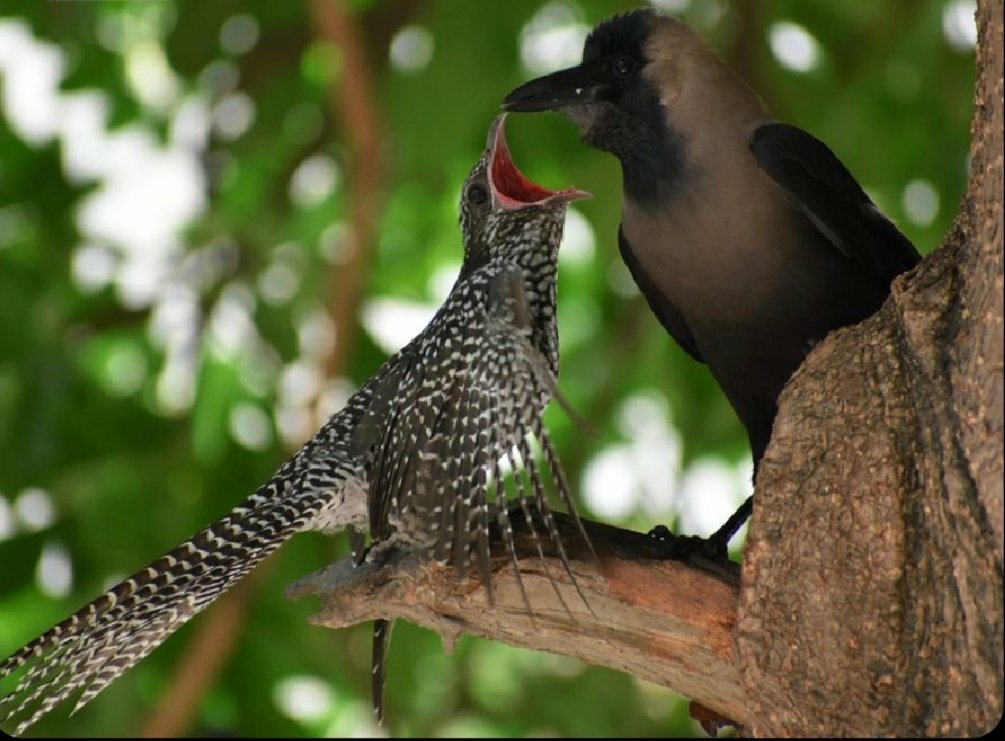
MY DOHA ....THE KOEL AND THE CROW


The Koel and the Crow


" Koel boli kaaga se
Madhur madhur kuchh bol
Jag mein meethi boli se
Har taalae ko khol..."
 
( Avtar Mota)
 
The above Doha was written by me just now for this photo sent by a friend

Creative Commons LicenseCHINAR SHADE by Autarmota is licensed under a Creative Commons Attribution-Noncommercial-No Derivative Works 2.5 India License.
Based on a work at http:\\autarmota.blogspot.com\.

Friday, December 29, 2023

TABLA MAESTRO USTAAD ALLAH RAKHA : "EINSTEIN OF THE RHYTHM"

                                            
   ( Teaching students in his Mumbai house) 
     ( Ustaad reading morning newspaper )
                         ( Thoughtful Ustaad )
               ( Blessing Ustaad Zakir Hussain ) 
                  ( With Ahmed Jan Thirakwa ) 
( Change of instruments with Pandit Ravi Shanker)
     ( Father and son....Ustaad Allah Rakha and Ustaad Zakir Hussain )


USTAAD  ALLAH RAKHA ( 1919-2000 )....."EINSTEIN OF THE RHYTHM"

The well known American percussionist and musicologist Mickey Hart  called him " EINSTEIN OF THE RHYTHM". And this great Ustaad did all to introduce Eastern Tabla rhythms to the  West . He was a Tabla wizard next to the legendary Ahmed Jan Thirakwa.His talented son Zakir Hussain is also following father's footsteps. When he died , the then  president of India Shri  K.R. Narayanan said this :-

"An uncommon pulsation has been stilled. His wrists, palms, and fingers produced from the Tabla ,  percussion of magical quality which maintained the tenor and tempo of India's uniquely assimilative musical culture."

A proud Dogra and the son of a farmer, Allah Rakha was born at Bhagwal village falling in Hiranagar Tehsil( district Kathua)  ,  Jammu . Falling in Chan Arorian Panchayat block,  Bhagwal vilage is about 12km from Hiranagar town. Ustaad Allah Rakha  left his village when he was barely 12 years old to learn music from  Mian Qader Baksh of the Punjab Gharana (Punjabi Gharana ) ..At the age of 15, he had  learnt  Tabla and moved to Pathankote and later to Lahore where he stayed for some years .In 1930,   he joined the then AIR Lahore  .In 1940,  he joined   AIR Mumbai as station's first ever Tabla solo player .
His influence turned global when he accompanied  Bade Ghulam Ali Khan, Allauddin Khan, Vilayat Khan, Vasant Rai, Ali Akbar Khan and  more specifically Pandit Ravi Shanker in various performances .  Ustaad Allah Rakha had closest  association with with Pandit Ravi Shanker and George Harrison  .
While Ustad used to generally team up with Pandit Ravi Shankar for his performances, he once collaborated with jazz drummer Buddy Rich for an album, Rich à la Rakha in 1968. Some of his greatest works have been in the form of albums Improvisations, West Meets East, Album 3 (with Ravi Shankar, Yehudi Menuhin, Jean Pierre Rampel, Martine Gelliot), Angel (1976), Master Drummers with Zakir Hussain (1991), Tabla Duet, Chhanda Dhara (1994), Ultimate in Taal-vidya, Magnasound/OMI (1996), Magical Moments of Rhythm with Zakir Hussain and Eternal Music (1997).He also accompanied several Carnatic musicians including  Vidwan K V Narayanaswamy ,
Vidwan Palghat Raghu and L Subramaniam.

Very few people  know he also composed music for about 35  Hindi films from 1943 to 1948. Some of them include 'Bewafa' (1947), Laila (1954), Khandaan' (1955), Alam Ara (1956). He worked closely with music director Naushad . His  name appears on the screen as 'A R Qureshi', hence easily missed by many film historians.

As father and  a  dedicated  teacher ,  he taught everything of Tabla to his talented sons Zakir Hussain  and Fazal Qureshi . His well known disciples include  Shankha Chatterjee  , Prafulla Athalye, Aditya Kalyanpur, Anuradha Pal, Nishikant Barodekar, Uday Ramdas and Yogesh Samsi .

He was honoured with Padama-Shri, Padama-Bushan  and Sangeet Natak Akademi  awards .Ustaad Allah Rakha  became a devotee of Satya Sai Baba of Puttaparthi. He   was simple , god fearing and helpful person.  Meeting any   person from his land of birth would cheer him up. Dogri Sanstha Jammu also honoured Ustaad some years before his death and ustaad spoke fluent Dogri in his address during that event. This is what Manu Khajuria has tweeted about Ustaad Allah Rakha :-

"I was lucky to hear Ustad Allah Rakha ji speak chaste Dogri in an event in Delhi demanding the inclusion of the Dogri language in the 8th schedule."

In an interview to Ravinder Kaul, Ustaad Allah Rakha has said this in chaste Dogri  :-

" I have  travelled and performed all over the world  but Jammu is really very special. It is my homeland .The best recognition that  a man cherishes  is the one that he gets in his own homeland.I feel very elated. I feel I must  do something for my own land. I love to come here and converse in my own mother tongue ."

About  his sons  especially Zakir Hussain Ustaad Allah Rakha has said this :-

“I don’t expect my sons to be me because what I’m doing is already done. They’ve to be better than me. Photocopies are eventually consigned to the dust bin and only originals preserved.”

( Avtar Mota )


Creative Commons License
CHINAR SHADE by Autarmota is licensed under a Creative Commons Attribution-Noncommercial-No Derivative Works 2.5 India License.
Based on a work at http:\\autarmota.blogspot.com\.

Monday, December 25, 2023

WHEN THE NEW BRIDE ENTERS HER IN LAW'S HOUSE FOR THE FIRST TIME


VARIV   NISH -HAI   VAATCH-KHAI ..

After her marriage , when a  Kashmiri bride is about to enter her husband’s  house for the first time ,  the traditional  welcome is done with group singing ( Chhakri style with Tumbaknaari )  by Kashmiri  ladies . Quite often a Bacha ( male dressed as female) would also dance to high pitch beats and singing of ," Variv nish hai vaatch-khai " . They generally sing this :- ……..   

"Dhandhan kari  zchandan lisha
Variv nish-hai  vaatch_khaai
Zaamav korhaai kuthis gachcha
Variv nish-hai vaatch_khaai..'

( Polish your teeth with a piece of sandalwood ,
 You are  about to  enter  your inlaw’s  house .
Your husband’s sisters have decorated your room,
You are  about to  enter  your inlaw’s  house .)

I have heard this singing in Pandit and Muslim marriages. Pandits continue with the tradition in exile also.  Bachas are frequently engaged in marriages now. They are seen in Jammu and even in Delhi dancing in marriages. Presently, a Bacha is used by singing party to make people dance and collect extra money . A Bacha is introduced to make young and old dance . He is otherwise a member of the singing party . When the nav  nosh  enters variv for the first time after the lagan (which is generally a marriage hall) ,  the Bacha is there with singers . This is present position in at least 50 percent marriages. "Dhandhan kari zsndan lisha" is sung in evenings if it is day lagan and mornings if it is night lagan when the nav nosh enters variv. The singing party comes on Mehndiraat for almost full night and also for about  one hour when the nav nosh comes to variv after the lagan ceremony.

 Kashmiris had their traditional style of dance and music since ancient times. In Kashmiri  marriages,  the Vanvun singing can be traced to Vedic period and it bears close proximity to  Sama-Vedic chants of Rishis . Sama Veda is the Veda of melodies and chants. It is believed that the Sama Veda was compiled during 1200 or 1000 BCE . Sama Veda is exclusively compiled for ritual application. Its verses were chanted at the ceremonies such as the Soma-sacrifice. It praises deities such as Indra, Agni, and Soma. 

By and large , the Vanvun of Kashmiri Pandits  is governed by Varṇa (pronunciation), Svara (chanting notes), Mātrā (duration) Balam (force), Sāma (continuity) and Santāna (conjugation, punctuation). Sama-Vedic chants are also bound by these basic principles .

( Avtar Mota )

PS
For those who don't know Kashmiri

Nav.....means new

Nosh....means daughter in law

Variv ...means in law's house

Bacha ...A male dressed in female attire and dancing with a music party generally in marriages. This dance known as Bacha Nagma was introduced by Afghans in Kashmir.


Creative Commons License
CHINAR SHADE by Autarmota is licensed under a Creative Commons Attribution-Noncommercial-No Derivative Works 2.5 India License.
Based on a work at http:\\autarmota.blogspot.com\.

Wednesday, December 20, 2023

THE ICONIC JOURNALIST SHAM LAL (1912-2007)


                            ( Sham Lal 1967 )

                                     
                  ( Sham Lal by R K Lakshman )
                               ( Sham Lal in his study )
                                ( Sham Lal )
                      ( Sham Lal in his office 1967)
                                                  

REMEMBERING SHAM LAL (1912-2007), THE ICONIC JOURNALIST OF INDIA


“On this earth, many worlds remain uninhabited, yet people live in the wrong places and waste their lives.”…………Nirmal Verma


All along his life, Sham Lal remained a friend of Hindi writer Nirmal Verma. Verma dropped in unannounced at his Mumbai residence. He also kept visiting him in Delhi. Nirmal Verma had lived in Prague (Czech Republic) for more than 10 years. He was invited by the Oriental Institute (Prague) to initiate a programme to translate modern Czech writers such as Karel Čapek, Milan Kundera, and Bohumil Hrabal into Hindi. Franz Kafka (writer and philosopher), Jaroslav Seifert (Nobel laureate poet), Karel Čapek (famous writer), Bertha von Suttner (Nobel laureate novelist), Alphonse Mucha (famous artist), Rainer Maria Rilke (poet and novelist), and Jan Hammer (great musician) were associated with Prague. Sigmund Freud was born in Pribor, just four hours’ drive from Prague. The well-known film director Milos Forman was a Czech from Caslav, just one hour’s drive from Prague. In Prague, Verma had been fully exposed to the great corpus of European literature and art. With Nirmal Verma and Mexican poet/philosopher Octavio Paz, Sham Lal felt intellectual compatibility. He shared this compatibility with many more people within the country and outside.


If one looks at the index to “A Hundred Encounters”, a collection of Sham Lal's writing, one gains some sense of the generous breadth of his world. It begins with Adorno and Akhmatova, moves through Baudelaire, the Bible and the Bhagwad Gita and traverses via Vishnu, Vidal, Van Gogh and Vyasa to, finally, Andrei Zhadnov. This anthology is a selection of his travels and encounters, of places and people – with a difference: his destination is the mindscape, and his encounters are with the people who challenged the limits of ideas. The book is a brief history of ideas in one hundred chapters. And the minds that pass through the pages are Adorno, Pound, Genet, Sartre, Kafka, Kundera, Said, Paz, Mann, Fuentes, Grass, Havel, Fukuyama, Derrida, Beckett, Auden, and Malraux. Many elders still remember the illuminating write-up of Sham Lal in the TOI on Kafka and Thomas Mann. He begins with this:

"For long, I have had the uneasy feeling that the doctrine of karma takes us straight into Franz Kafka's world. For, when most religions which had their birth in this country seek release, whatever the name by which they call it, from the cycle of rebirths, and explain away all that the individual suffers as a consequence of his or her deeds in a previous life about which he or she knows nothing, the story is not very different from what the Czech writer tells in The Trial."


Sham Lal’s editorials were discussed in coffee houses. His column, ’Life And Letters’, created debates in the intellectual circles of the country. I am told that copies of The Times of India that had his write-ups were physically sent to his admirers living in the US and UK. In India, his admirers included P. N. Haksar, Indira Gandhi, Dr Manmohan Singh, Narasimha Rao, L. K. Advani, Atal Bihari Vajpayee, Raj Kumar (actor), Dev Anand (actor), Akhtar ul Iman (poet), R. N. Kao, M. F. Husain, Harivansh Rai Bachchan, Ali Sardar Jafri, Satyajit Ray, R. K. Laxman, Sombhu Mitra, Ram Kumar (artist), Prof. Ratan Parimoo and many more. The list is endless. He had a sizeable readership in Kashmir. I remember Peer Gias ud Din, P. N. Jalali, Bansi Parimu, Wahid Raina, Capt. S. K. Tikoo, Janak Singh, V. K. Dethe, college professors and many more intellectuals discussing Sham Lal’s write-ups in Srinagar’s Coffee House. There used to be many more whom I don’t remember or recollect at the moment. From Rainawari, I would include J. L. Raina, Predimen Wattal, Farooq Nazki, Sadiq Ali, Chaman Lal Abhay, Prof. Puran Kachru, P. N. Kachru (artist) and many more, including my friend Neter Raina.

Visitors to Sham Lal's residence at Gulmohar Park in New Delhi felt as if his house was constructed of books. From the floor to the ceiling in every room, one could only see books. He had original issues of many international magazines. Comprising more than 25,000 books, he had a vast collection of poetry, drama, history, philosophy, religion, and every important work ever published in the fields of criticism and humanities. The books were orderly arranged and well-stocked. People used to tell an apocryphal story about thieves who broke into his Delhi house and were disgusted that there was nothing but books from floor to ceiling in every room. Into this private library, those who dropped in usually included Octavio Paz, André Béteille, Ian Jack, Bipan Chandra, Nirmal Verma, Giri Lal Jain, Subhash Chakravarti, Sukhomoy Chakraborty, Gautam Adhikari and many more friends of Sham Lal.

Born in 1912, Sham Lal took a Master's degree in English literature in 1933. In 1934, armed with a degree in English, he arrived at the office of what was then a stressed paper called The Hindustan Times. The paper was on the verge of closure, but did not die because of its financier, Seth Ghanshyam Das Birla. In 1950, Sham Lal moved to The Times of India, rising up the ladder to become its editor. Post-retirement from the TOI, he joined The Telegraph in 1993. For over 60 years, Sham Lal chronicled the birth of the Indian nation, its pains, its anxious moments, its disappointments, and its rare moments of ecstasy. But this has not been a chronicle of events or even a commentary upon them. It has been, throughout, a chronicle of the ideas that shaped the birth of the Indian nation. Sham Lal had the exceptional skill to combine material with clarity to yield a style that bordered on poetry. Very few non-English-born writers have succeeded in this rare art. He could combine the colloquial, often the humdrum usage of English, with the sublime, to create prose that was bright in its originality. The veteran journalist who wrote a weekly literary column in the Mumbai edition of the TOI called Life and Letters was an institution unto himself. After retirement, he continued writing this hugely popular literary column for The Telegraph and occasionally wrote for a journal, Biblio: A Review of Books.

 In 2003, the second volume of Sham Lal's collected writings was released. It carried the title Indian Realities – In Bits and Pieces. This collection of over a hundred of Sham Lal's writings as a columnist analyses the larger forces at work in today's world and their impact on the course of events in this country. Sham Lal provides a nuanced view on complex issues such as globalisation, democracy and economic liberalisation. His interaction with historians, sociologists, economists, political scientists, poets and novelists reveals a collection of writing that is multi-layered, analytical and intelligent and, above all, extremely relevant in today's times. Through this book, one comes to know his amazing understanding of the kind and malicious forces at work in India. About poets, playwrights and novelists, Sham Lal says this:


“It is they, in contrast to social scientists, who are primarily concerned with existential problems and seek answers to questions which bug the more sensitive today, who wonder why, even in affluent societies, people look so distraught, personal reactions get so skewed, and so many are afflicted by ennui, and a sense of loneliness or of loss of meaning.”

 Octavio Paz, a Nobel Laureate and Mexican Ambassador in India, referred to Sham Lal as – “The brilliant Sham Lal… as deeply read in modern Western thought as in the philosophical traditions of India.” When Paz died, Sham Lal paid this magnificent tribute to his friend Octavio Paz: “In his death, the world, with large parts of it under the sway of moral cretins, has lost a sane voice sensitive to the ignominy of a modernity gone berserk.”

About Sham Lal, Darryl D'Monte writes this:

“He had no time for pedants or publicists. Prem Shankar Jha remembered how he once accompanied Sham Lal, who had, much against his better judgment, accepted an invitation to dinner at the French Ambassador's residence. They were first kept waiting while the host came down. But Sham Lal's discomfiture was compounded when the Ambassador insisted on using the occasion for some sales pitch about the Airbus, a subject about which the editor knew little and cared less. He had a few friends whose company he enjoyed. The writer Nirmal Verma was one of them. The poet Baqar Mehdi was another, and colleagues would regale themselves with anecdotes about Mehdi coming to visit Sham Lal shortly before he left the office at 5 pm, the day's editorial page done. After some perfunctory pleasantries, they would both read their respective tomes in total silence. This would continue in the car en route to the editor's residence off Nepean Sea Road, till Mehdi would take his leave later that evening.”


Sham Lal was followed by Giri Lal Jain. And Jain was followed by Dilip Padgaonkar as editor of the TOI. Of the three, Sham Lal was the unapologetic ivory-tower intellectual, who concerned himself with intellectual currents and used them with great acuity to discuss politics and society. Sham Lal had in-depth knowledge of the works of major philosophers (Indian and Western), poets, writers, novelists, playwrights and historians. He also had a profound study of the Bhagavad Gita, Buddhism, Upanishads, the Mahabharata and many more ancient religious texts. Jain was sharp, practical and the inveterate political commentator who had a brilliant understanding of the interplay of political forces within the country and outside. He had a profound knowledge of world history and political movements that shaped modern states. Jain believed that the political-economic order that Jawaharlal Nehru had fashioned was as much in its last throes as its progenitor, the Marxist–Leninist–Stalinist order. Jain was the only elite journalist who sympathised openly with the sufferings of Kashmiri Pandits through his write-ups and speeches. Padgaonkar was nearer to Sham Lal in his interest in ideas. Padgaonkar faced sharp criticism from journalists who believed that he devalued the position of the editor by playing along with the paper’s owner, Samir Jain, and that he was responsible for the death of the editor, as readers from the 1950s through the 1980s knew in India, which Sham Lal and Giri Lal Jain firmly maintained. Padgaonkar studied in France and received a doctoral degree in Social Sciences from the Sorbonne University. He would argue for Indian secularism; however, at the same time, he was not hostile to the idea of religion, as French secularists and their Indian counterparts were. Padgaonkar had studied Yogavashishtha and Kashmir Shaivism. Both Sham Lal and Giri Lal Jain were respected by the political leadership of the country, I mean, the ruling and the opposition alike. Sunil Jain, a senior journalist and son of former TOI editor, late Giri Lal Jain, has written this:


"Sham Lal was like a Guru to my dad. He was among his closest friends. Even after Sham Lal, my father, who was the editor of TOI at the time, would regularly visit Sham Lal. And this practice continued even after my dad retired."


Sham Lal lost his eyesight for reading books, yet he retained his passion for literature, men of letters and things of the mind, heart and soul till the last breath of his life. He died in his sleep. Sham Lal loved his family, comprising two daughters, a son and gracious Vimla Ji, his wife. Rarely shall we again see someone like Sham Lal in the field of journalism. If the generation senior to me had every reason to remember Sham Lal, my generation has every reason not to forget him.

Today, in the arena of journalism, we have new players who are better equipped with technology, education and exposure. They are sharp, intelligent and well-connected. However, a serious reader finds something missing in this field that is now driven by values of expediency and utility. I am convinced that Jigar Moradabadi was right when he said:


"Vahi maikhaana o sehaba

vahi saagar vahi sheesha,

Magar aavaaz e nosha-nosh

maddham hoti jaati hai….


Vahi hai zindagi lekin

'Jigar' ye haal hai apnaa,

ki jaise zindagi se zindagi

kam hoti jaati hai…."


(The same tavern, the same companions,
the same goblet, the same wine,
Yet the sound of revelry and drinking
keeps growing faint…

Life is still the same, but, O Jigar,
Such is our condition now,
as though from life itself
life is slowly ebbing away…”)


(Avtar Mota) 


 Creative Commons LicenseCHINAR SHADE by Autarmota is licensed under a Creative Commons Attribution-Noncommercial-No Derivative Works 2.5 India License.
Based on a work at http:\\autarmota.blogspot.com\.