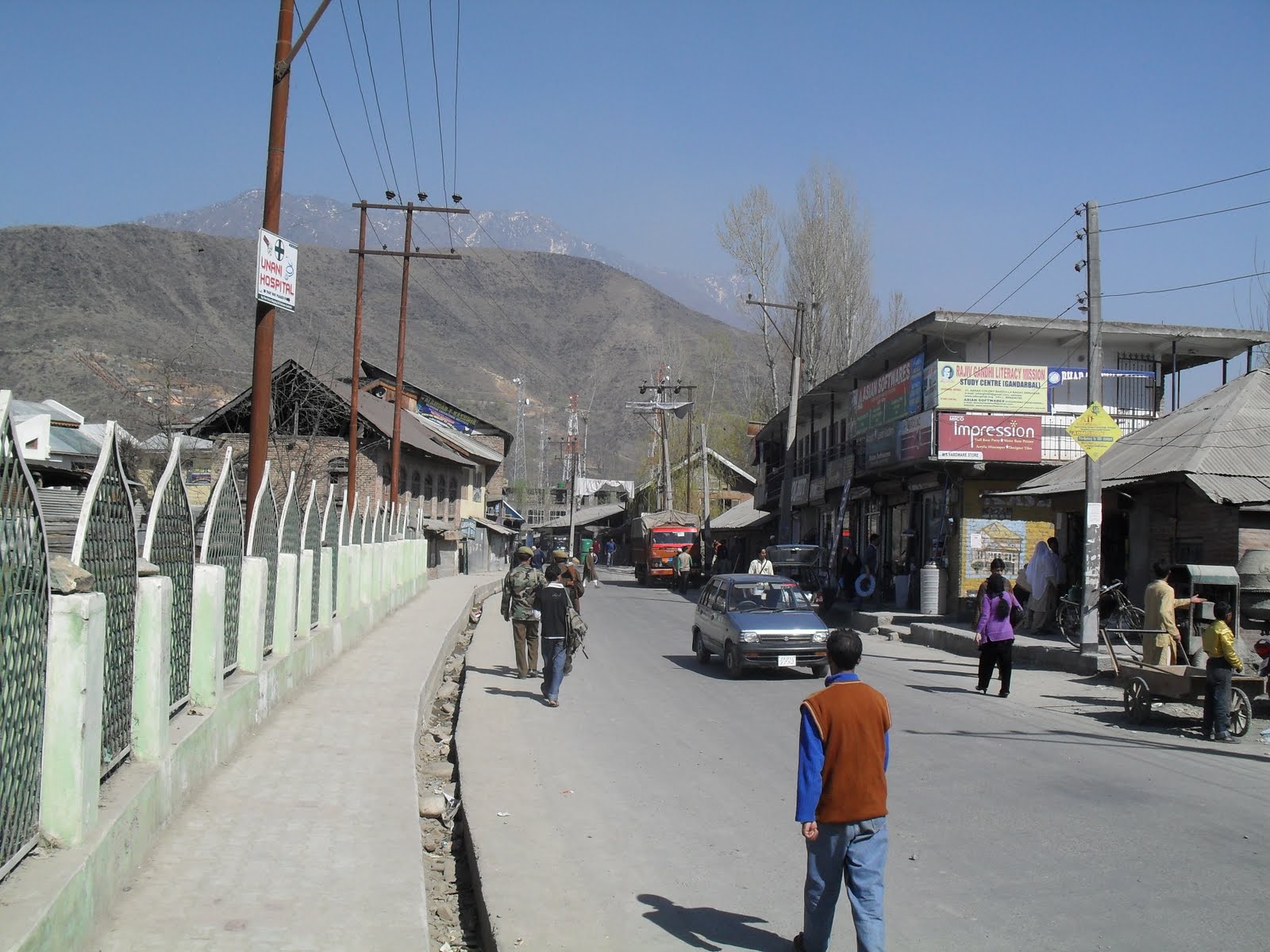
BHADERWAH: A BEAUTIFUL MINI KASHMIR IN JAMMU PROVINCE OF J&K UT.
( Photos by Avtar Mota and D K Dogra )
"The happiest, prettiest country ever seen in the
mountains."
Sir G.T. Vigne, who toured this region in 1842
A.D., described Bhaderwah in these words.
“Jenab, this is Chhota Kashmir (Mini Kashmir).
You can find Kouls, Mattoos, Rainas, Razdans, Zutishis and many other Kashmiri
Pandits living peacefully for ages. You shall also find Zargars, Bandays,
Nayaks, Misgars, Wanis, Bhats, Ahangars, Mirs and Dars amongst Kashmiri Muslims
also living happily. Most of the Kashmiris living here have migrated from
Kashmir in the middle of the nineteenth century from Anantnag district due to recurring
famines and failure of the then rulers to come to the rescue of starving villagers.” Said Ghulam Nabi Bhat met me near the Jamia
Mosque in Bhaderwah town.
Bhaderwah is also known as “Nagon ki
bhoomi” or’‘Land of Serpents '. The
Bhaderwah Town (Nagar Bhaderwah) was known as Hettary Nagar, and before that,
there were two other towns, namely Donga Nagar and Udho Nagar. Bhadarwah was
ruled by the "Naga Dynasty”. The powerful Kingdom of Bhadu Bilawar also
existed in nearby hills, and its rulers conquered and annexed the states of
Bhaderwah and Basohli to their Kingdom. Prince Radhak was given the state of
Bhaderwah, and he ruled it, calling himself Raja Lakshmi Dev. He shifted his
capital to Bhaderwah proper, called Nagar. The last king of this dynasty was
"Pahar Chand".
During the rule of Maharaja
Ghulab Singh, Bhaderwah became a part of the J&K State. When Maharaja Partap Singh was crowned,
Bhaderwah was given as "Jageer" to his younger brother Raja Amar
Singh.
Bhaderwah is known as Chhota
Kashmir (Mini Kashmir) in Jammu and Kashmir State. It is a beautiful valley
with hills of Kishtawar in its north, Chamba (HP) in its east, the Basholi area of
Jammu near River Ravi in its south and the Chenani area of Udhampur district in its
west. One can safely call this place the queen of the hills. Perched at a height
of about 5300 feet from sea level and surrounded by snow-clad hills with
Deodar forests on all sides, this area has a unique history and culture. You
find Kashmiri Pandits , Kashmiri speaking Muslims , Gaddis , Thakkars , Wazirs , Kotwals , Parihars , Chib Rajputs and Manhas Rajputs , Khatris from Punjab
, Mahajans and Bhaderwahi speaking locals of other tribes and castes living in
peace and harmony . One can safely call it a melting pot of many cultures
and civilisations.
To reach this valley, one has to
take a right turn on the Jammu-Srinagar highway near Batote and go all along the River
Chenab upstream to reach Doda. Doda is about 60 km from Batote. The Baglihar
Hydro-electric Project has submerged a vast area of Doda district into the Chenab
waters. Even the Pul-Doda market has also submerged along with the old bridge on the River Chenab at Doda. This dam has given depth to the Chenab from Baglihar
upstream and made it silent. One could
hear a lot of noise near the Chenab banks before the construction of the dam reservoir
of Baglihaar. Surely depth does bring silence. At Doda, Neeru stream coming
from the Bhaderwah hills joins the mighty Chenab. So, another right turn at Doda and
about 30 km in the upstream direction of Neeru lies Bhaderwah. It just resembles the Pahalgam valley of Kashmir. The temperature during summer ranges between 18 and
30 degrees centigrade, making it climatically more pleasant than Srinagar. Its
bewitching beauty enthrals any visitor.
The construction of residential houses in
Bhaderwah is done in the Kashmiri style of
architecture. The Dubs, dark alleys, gossiping men on roads, butcher shops,
Kadam vegetable, Pherans, Kashmiri bakery shops, Azaan and Vedic Mantras from loudspeakers
during morning hours make every Kashmiri
visitor feel as if he is at some place in his motherland.
Newly constructed mosques bear the minaret and the dome architecture, but the
older ones seen all over the district bear a close resemblance to the Kashmiri style architecture.
Naga Worship
The
religious landscape of early Kashmir, as reflected in the Nilamata Purana,
demonstrates the centrality of Naga cults within the region’s sacred geography, also extending to Kishtawar and Bhaderwah. The text not only documents ritual
practices but also integrates indigenous serpent traditions into a broader
Brahmanical cosmological framework. In Shloka 633, Vasuki is described as:
“नागराजो वासुकिस्तु पापहारकः |
कश्मीरमण्डलमध्यस्थः
सर्वसिद्धिप्रदायकः
||”
(“Vasuki,
the king of the Nagas, is the remover of sins;
Abiding in the centre of Kashmir,
He is the bestower
of all attainments.”)
The
verse characterises Vasuki as the king of the Nagas (nāgarāja), the
remover of sins (pāpahārakaḥ), and the bestower of all attainments (sarva-siddhi-pradāyakaḥ),
situated at the centre of the Kashmiri mandala. This theological positioning
suggests more than devotional reverence; it reflects a process of sacral
territorialisation in which the landscape itself is mythically structured
around Naga authority. The attribution of salvific and beneficent powers to
Vasuki indicates the assimilation of earlier serpent veneration into an
increasingly systematised religious discourse.
The
continuity of this tradition is observable in the cultic practices associated
with the Vasuki Nag Temple in Bhaderwah. The Vasuki Nag Temple in Bhaderwah
(Doda district, Jammu and Kashmir, India) is an ancient Hindu shrine dedicated
to Vasuki, the king of Nagas and a significant figure in Naga worship
traditions. The temple enshrines black-stone idols of Vasuki Nag and Raja
Jamute Vahan, believed to be sculpted in ancient times and standing without visible
support at a steep angle, a remarkable feature admired for both its artistry
and mystery. The temple’s ritual calendar, particularly its annual fair,
preserves localised narratives that sustain Vasuki’s identity as guardian and
patron of the region. While the textual tradition presents a cosmological and
symbolic framework, the living practices at Bhaderwah illustrate how Naga
devotion operates at the intersection of mythology, regional identity, and
communal memory.
Historically,
the Chenab Valley (including Bhaderwah) has been culturally connected with
Kashmir through shared Naga worship traditions, similar ritual patterns and
pilgrimage practices, overlapping mythic geography tied to Himalayan sacred
landscapes
Naga
cults were not confined strictly to the Kashmir Valley; they extended across
adjacent hill regions. The Bhaderwah shrine appears to preserve this broader
Himalayan serpent tradition. Although Bhaderwah lies in the Jammu region
today, it has historically interacted with Kashmir culturally and religiously.
The survival of Vasuki worship there suggests continuity of a larger Kashmiri
Naga religious sphere rather than an isolated local cult.
The annual Kailash Kund Yatra is a festival
joined by Hindus and Muslims. The ancient Vasuki Nag Temple, Guptganga Temple,
Chandi Mata Temple, Jamia Mosque and Gatha Mosque are largely frequented
religious places. The black stone single-piece images in Vasuki Nag Temple were
covered by cloth when I visited, and the Purohit informed me that the same would be
opened for public Darshan after Baisakhi day. A three-day-long Mela Patt is also celebrated every year to commemorate the historic meeting between Emperor
Akbar and Raja Nagpal of Bhaderwah. Some time in the 16th century, Raja Nagpal
is reported to have gone to Delhi to meet the emperor. This festival is devoted
to Lord Vasuki Nath, the presiding deity of Bhaderwah. It is organised on the
conclusion of the Kailash Yatra. Wearing colourful clothes, people dance to the
tunes. The traditional Dakhu dance is a special attraction of this Mela.
“Kyaa saa Vaarai chhukha ”
(
Are you OK in Kashmiri)
“ Pandit Ji salaam ”
“Bee Shaa ji ”
(
Sit down, please, in Bhaderwahi )
“Kodi Ghaano ”
(Where are you going in Bhaderwahi)
You hear these words most
frequently while moving in the Bazar. They are Kashmiri and Bhaderwaahi words. Bhaderwah has been an important town on the old Shawl Route of Kashmir. This shawl
route means Srinagar – Anantnag – Daksum – Kishtwar – Bhaderwah – Sarthal-Basholi
-Chamba, and other Kingdoms of Himachal
Pradesh. Kashmiri shawls and craftsmen have travelled from this route to Chamba
and Basholi in the early 18th and 19th centuries. The Basholi area of Kathua district had
a long relationship with Kashmir. Some painters of Pahari Miniature were Kashmiri
Pandits. I quote Dr M S Randhawa, eminent Art historian:-
"This family of Razdan or
Raina Brahmins were responsible for the introduction of one of the most
romantic movements in fine art in almost all the principalities of Jasrota,
Basohli, Guler, Jummu, Chamba, Noorpur and Kangra. Pandit Shiv Raina and his
sons, Manak and Nainsukh, the master painters of Pahari Miniature, were in fact
Kashmiri fugitive Brahmins."
The rulers of Basholi had Kashmiri Pandits as
their Raj Purohits. I happened to know one Razdan family that owned large
agricultural land in and around the Basholi town. Prakash Rani Razdan MLC was from
the Razdan family of Basholi, and her ancestors were Purohits and painters in
the Basholi Darbar. She was from Lahore and was known for her aristocratic lifestyle. She enjoyed horse riding and pan chewing. I came to know many forgotten
links of Basholi and Kashmir during my stay in this area as manager of our
bank’s branch. Pashmina shawl industry flourishes in Basholi town to this day. Even the Rajas of Jasrota (Kathua) had Kashmiri craftsmen (shawl
It was a pleasant surprise to see
that people in Bhaderwah use Kangri in winters. The Muslims of Kashmiri
ancestry in Bhaderwah use Rabab and Nott (Matka) in singing Chhakri in
Challant style popularised by Ghulam Nabi Doolwal of Dool (Kishtawar). Bhaderwahi is the major spoken language of the area. People still remember the late Prof Saproo, Principal of Bhaderwah Degree College, with reverence and
regard for the spread of education in this area. Strange but true, away from
Kashmir, you are in Kashmir. Tourist potential areas of this region are:-
Seoj and Kailash
Jai valley-sabardhar
Sonbain-Guldanda-chatergala
Padri Gali-Bhal Padri
Bhaderwah town and periphery )


(Dussehra in Bhaderwah.Photo D K Dogra)


( Final site of Kailash Yatra ... Photo Dharam Kant Dogra ) A three-day-long


A motorable road has now been completed to connect Bhaderwah with Basholi. A bridge on the river Ravi at Basholi has connected this area with Pathankote. The Kishtawar- Bhaderwah road has been operational for the last 50 years. A road also links Kishtwar with Anantnag now (Via Simthan pass) . Thus, this area now comes on the alternate connectivity to Kashmir via Pathankote. That opens the floodgates of tourism for this area. This position qualifies Bha
People in Bhaderwah town are generally well educated. Most of them are teachers (in colleges, schools and universities), doctors, lawyers and engineers. Bhaderwah has a degree college in the town, imparting quality education since the early fifties of the last century. The University of Jammu has also established an off-site campus at Bhaderwah. Kashmiri culture and language are widespread in the entire Doda and adjoining Kishtwar districts of the state. Bhaderwah is to be developed as a Gateway to the State’s Tourism.
And then Abdul Qudoos Rasa Javidani (1901-1979), an eminent poet from this area, wrote his poems both in Urdu and the Kashmiri language. Rasa belonged to a family which had migrated from the village of Kadipora in Anantnag (Kashmir) to Bhadarwah. I end this post with lines from a beautiful Gazal of this poet. This Gazal has been sung soulfully by the well-known Kashmiri singer Raj Begum Sahiba.
“Masharaavthhuss janaana Tche Kurr yaad Peymoy Baa,
Chhukh Az wafaa begaan Tche Kurr Yaad Peymoy Baa.
Raadhaaiy Jigruss Kaan Taarith Baal maarith Guvv,
Goopaal Krishen Kaanhaa Tse Kurr Yaad Peymoy Baa.”..( Rasa javidaani )
(Love! Willfully, you forgot me!
When shall you remember me?
Why are you so noncommittal to my love?
When shall you remember me?
Piercing arrow in Radha’s tender heart,
You move playfully away.
O Gopala! O Krishna !O Kaanhaa !
When shall you remember me !)

CHINAR SHADE by Autarmota is licensed under a Creative Commons Attribution-Noncommercial-No Derivative Works 2.5 India License.
Based on a work at http:\\autarmota.blogspot.com\.